What: Traditional markets inside the walled medina, north of Jemaa el-Fna. Hours: ~10:00–20:00 (varies; some close for Friday prayer). Best times: 10:00–12:00 (calm) or late afternoon (atmosphere). Main souks: Semmarine (textiles, lanterns), Cherratin (leather), Zrabi (carpets), el Attarine (brass, perfumes), Haddadine (metalwork). Bargaining: Start at 40–50% of first price, stay friendly. Must-buys: Spices (20–80 MAD), babouches (80–200 MAD), lanterns (100–500 MAD), rugs (500–5,000+ MAD). Guided tour: Marrakech Walking Tour from €20.
What Are the Marrakech Souks?
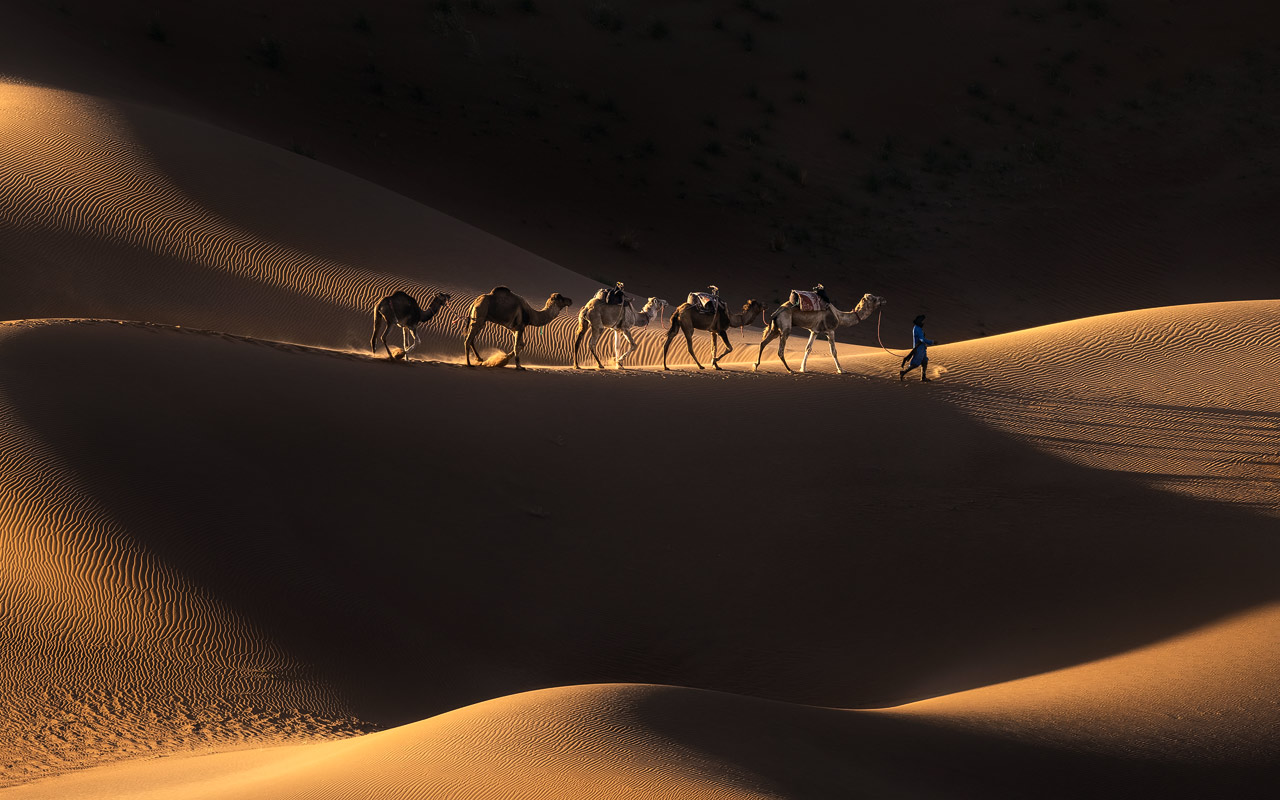
The Marrakech souks are a network of interconnected markets inside the old walled city (medina), where locals and visitors buy everything from spices and lanterns to everyday hardware. Dating back to the 11th century when the Almoravids founded Marrakech on key caravan routes linking sub-Saharan Africa with North Africa and Europe, the souks were the beating heart of trade — and they still feel that way today.
Caravans once brought gold, salt, ivory, and textiles from the south, while traders from the north introduced silks, spices, and luxury goods. Over time, artisans organised themselves into guilds, each occupying a specific area — which is why today you still find dyers in one quarter, blacksmiths in another, and leather workers in a third.
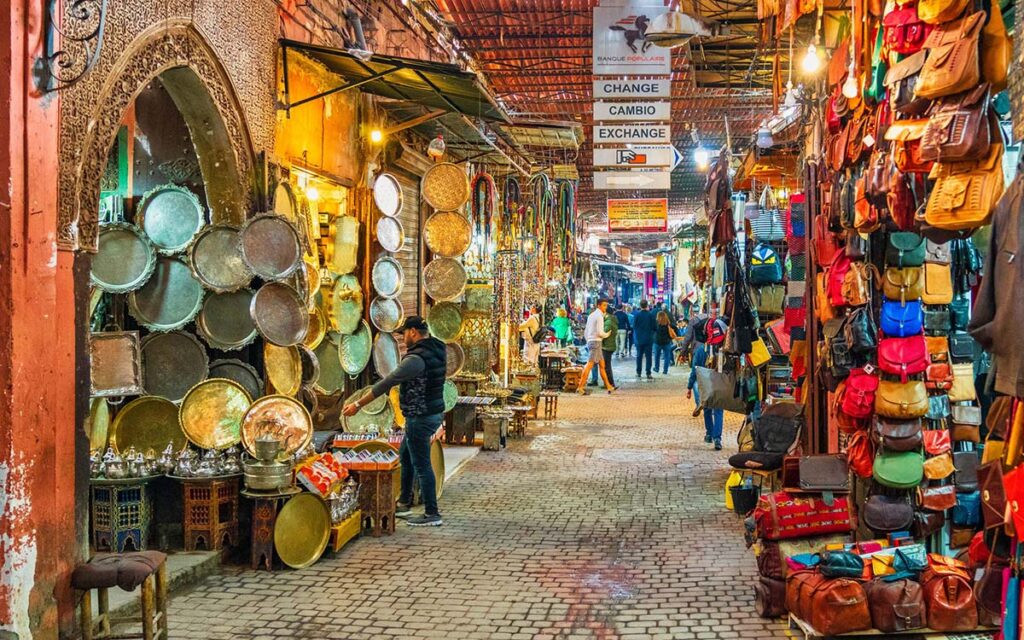
Think of the souks as Marrakech’s shopping mall: narrow alleys, wooden roofs casting striped shadows, and the constant murmur of bargaining in Arabic, French, and English. Stalls overflow with spices and woven baskets, rows of brass lanterns and teapots, leather workshops, carpet shops with rugs stacked to the ceiling, and jewellery stalls next to hardware stores for locals.
The 7 Named Souks — What Each One Sells
| Souk | Specialty | Price Range | Best For |
|---|---|---|---|
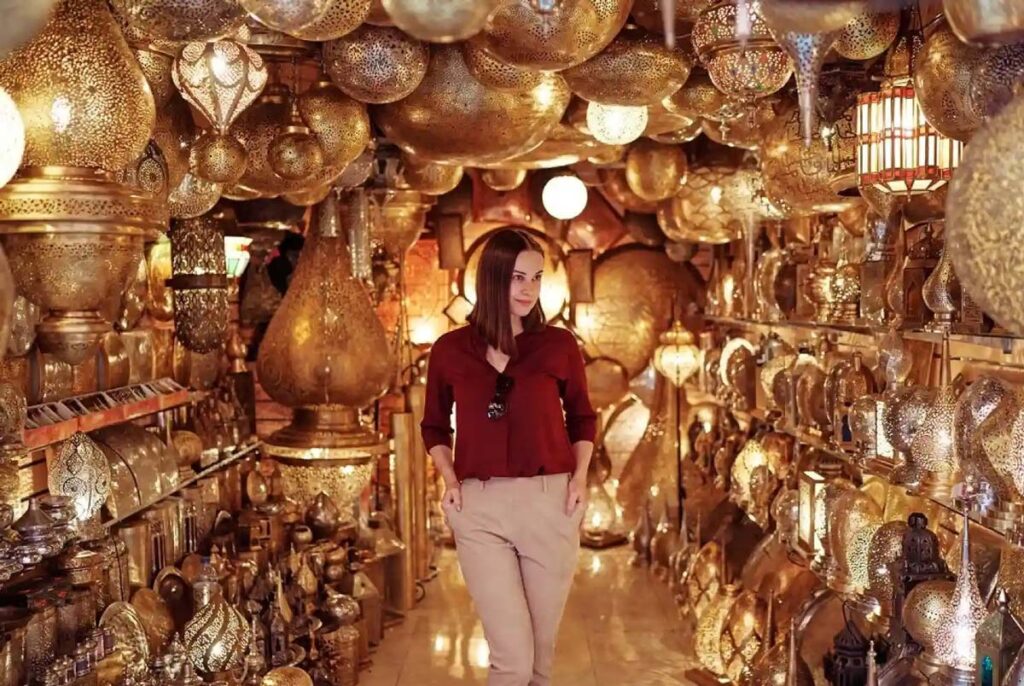
| Souk Semmarine | Textiles, lanterns, jewellery, souvenirs | 50–500+ MAD | First visit — the “high street” |
| Souk el Attarine | Brassware, lamps, perfumes, spices | 20–400 MAD | Aromatics and metalwork |
| Souk Cherratin | Leather bags, belts, babouches | 80–500 MAD | Leather shopping |
| Souk Zrabi | Handwoven Berber rugs, carpets | 500–5,000+ MAD | Carpet buying (take your time) |
| Souk Sebbaghine | Dyed yarns, colourful textiles | 30–300 MAD | Photography, fabrics |
| Souk Haddadine | Metalwork, blacksmiths, forged items | 50–400 MAD | Watching artisans work |
| Souk el Khemis | Second-hand goods, furniture, antiques | 20–1,000+ MAD | Treasure hunting (further out) |
Jemaa el-Fna Square isn’t a souk but it’s the gateway to all of them. By day: juice stands, herbalists, henna artists, and food stalls. By night: performers, storytellers, musicians, and pop-up restaurants. It’s a UNESCO-listed masterpiece of oral heritage and the beating heart of Marrakech.
What to Buy — With Prices
| Item | Price Range (MAD) | Price (€ approx) | Tip |
|---|---|---|---|
| Spices & teas (per bag/100g) | 20–80 | €2–8 | Ras el hanout, saffron, cumin. Smell before buying. |
| Babouches (leather slippers) | 80–200 | €8–20 | Check stitching quality. Goat leather is softer. |
| Leather bags | 150–500 | €15–50 | Smell for chemical treatment. Better quality higher up. |
| Brass lanterns | 100–500 | €10–50 | Check wiring if electric. Candle lanterns are simpler. |
| Berber rugs | 500–5,000+ | €50–500+ | Handwoven = higher price. Ask to see the back. |
| Ceramics (bowl/plate) | 30–200 | €3–20 | Hand-painted from Fez/Safi is highest quality. |
| Argan oil (100ml) | 80–150 | €8–15 | Cosmetic grade is lighter. Culinary is darker/nuttier. |
| Black soap / rose water | 20–60 | €2–6 | Buy at cooperatives for best quality. |
| Teapots (brass/silver) | 100–400 | €10–40 | Silver-plated costs more. Check the pour. |
How to Navigate the Souks
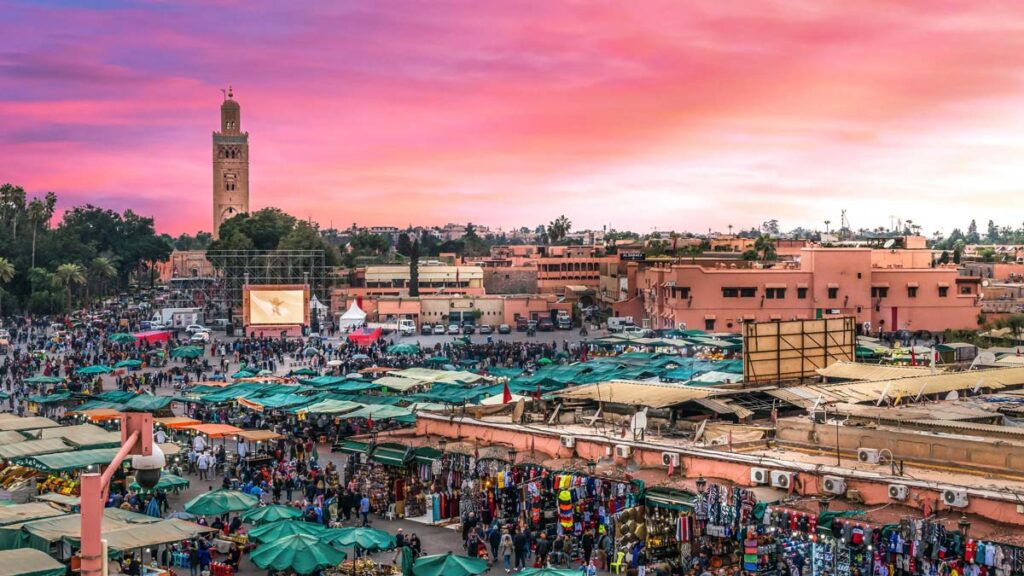
The souks feel like a maze at first, but they’re organised around a few main “spines” that run north from Jemaa el-Fna, with specialised alleys branching off. Souk Semmarine is the main artery — think of it as the high street.
Strategy for your first visit: Start at Jemaa el-Fna Square. Walk under the archways into Souk Semmarine. Drift to either side into smaller alleys, but note landmarks (a mosque, a café, a distinctive shop) to help you find your way back. You won’t memorise the layout in a day — and you don’t need to.
Navigation tools: Save your riad’s location on Google Maps offline — GPS works surprisingly well in the medina. Look up: signs often point towards Jemaa el-Fna, Koutoubia, or main gates. If lost, ask a stallholder or café worker for directions (not a tout who may insist on “guiding” you for a fee). For reliable mobile data: Morocco SIM card guide.
Transport to the souks: Taxis and ride-shares drop you near Jemaa el-Fna or Koutoubia Mosque — from there, the medina is pedestrian only. Traditional calèches (horse-drawn carriages) can bring you to the medina edge.
How to Bargain — 6 Steps
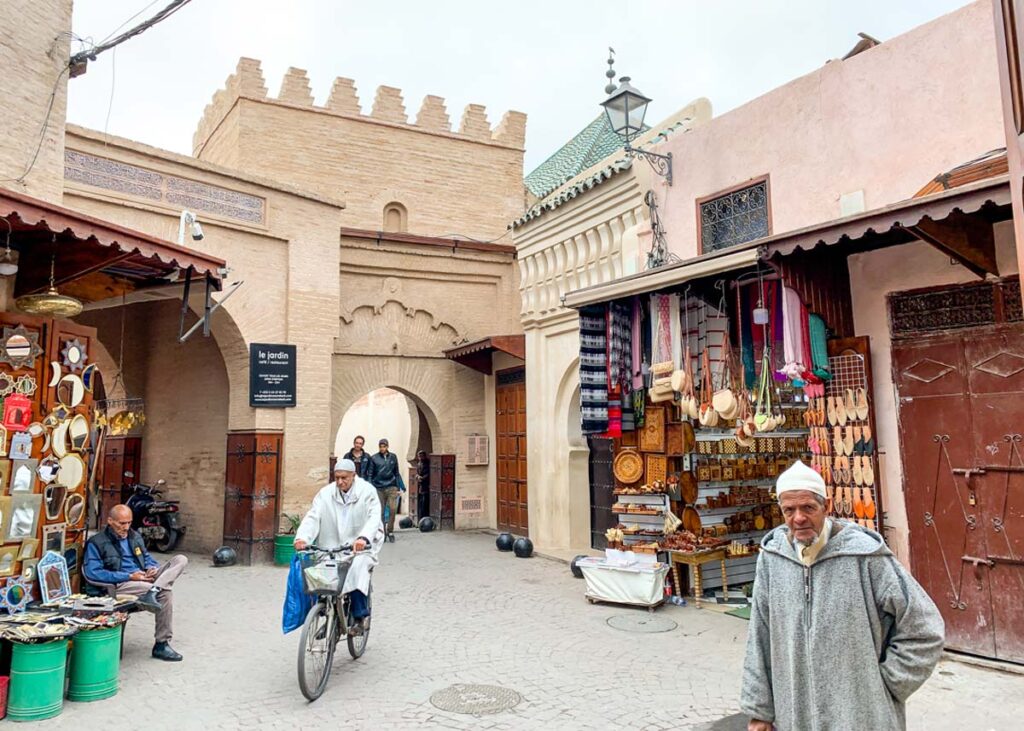
Bargaining is expected in the souks and can be genuinely fun when done with respect. Here’s the method that works:
1. Ask the price with a smile. Show interest but don’t appear desperate. The vendor names a starting price — this is always inflated.
2. Start low but realistic. Offer around 40–50% of the first price. This signals you know the game but aren’t trying to insult.
3. Increase gradually. Move up in small steps. There’s no need to jump straight to the vendor’s number. Each counter-offer should be slightly higher than your last.
4. Keep it friendly. Laugh, smile, make small talk. This is a social interaction as much as a transaction. Moroccan vendors enjoy the art of it.
5. Know when to walk away. If the price doesn’t feel right, thank the seller and move on. Often, they’ll call you back with a better offer. If they don’t, the price was already fair — or you can try the next shop.
6. Pay in dirhams. Paying in MAD keeps things simpler and usually gets you a better deal than paying in euros. The goal isn’t to “win” — it’s to reach a price that feels fair for both sides.
Food Markets & Souk Eats
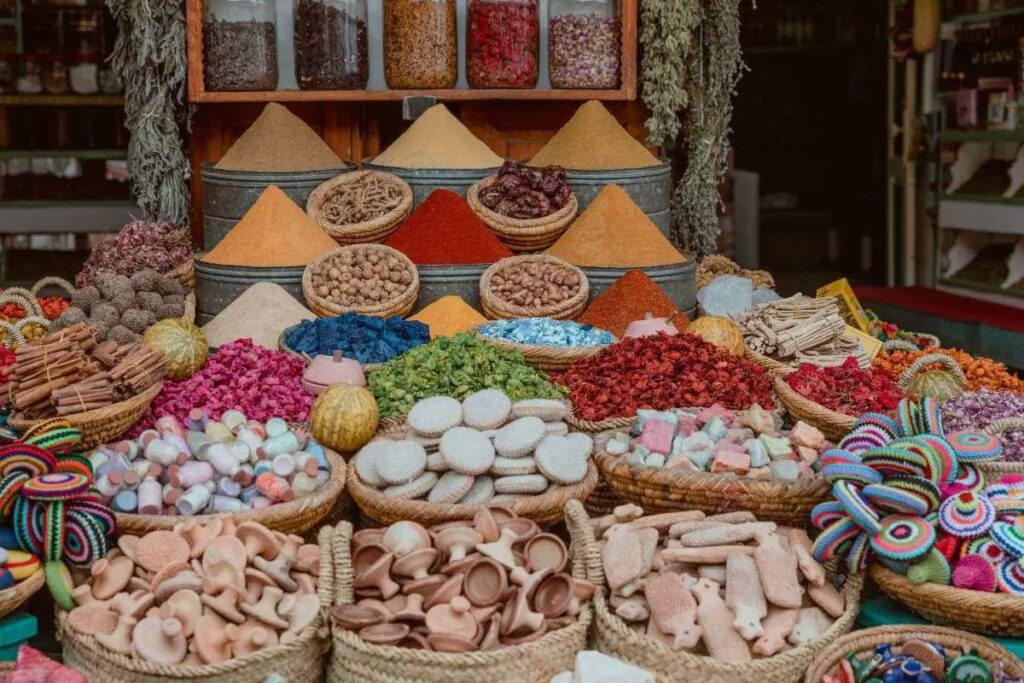
Food lovers will find as much to explore as shoppers. Look for stalls piled with olives, preserved lemons, dates, and nuts. Freshly baked khobz (round Moroccan bread) comes from communal ovens nearby. Tiny stands sell mint tea, msemen (Moroccan pancakes), and sweet pastries filled with almonds and honey.
Jemaa el-Fna food stalls are a destination in themselves — fresh-squeezed orange juice (4 MAD), grilled meats, snail soup (babouche), and harira soup. Choose vendors with high turnover and freshly cooked food. Sit at a café overlooking the alleys and watch the world go by with a glass of mint tea.
For the full cultural context around Moroccan food: Morocco culture and etiquette guide.
Hidden Gems & Artisan Quarters
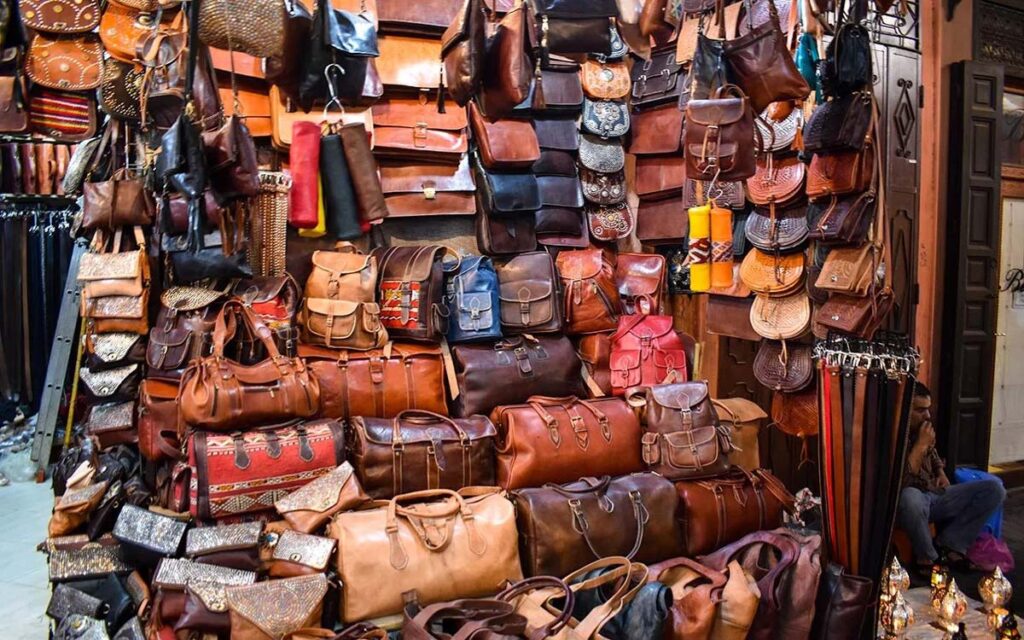
The best finds sit just a few steps from the busiest aisles. Beyond the main arteries, you’ll discover quiet antique shops stacked with old doors, chests, and Berber jewellery. Secluded riads with courtyard cafés and rooftop terraces. Small workshops where artisans carve wood, engrave metal, or paint ceramics by hand.
In Souk Haddadine, blacksmiths still hammer lanterns and teapots at their forges — the rhythmic clinking is mesmerising. In Souk Sebbaghine, freshly dyed yarns hang overhead in vivid reds, blues, and yellows. These quieter quarters are where the souks feel most authentic — and where a guided walking tour (from €20) adds the most value, because guides know exactly which alleys lead to working artisans vs tourist-facing shops.
Don’t be afraid to duck down a side alley. As long as you keep a mental note of your general direction back to Jemaa el-Fna, getting a little “lost” is part of the experience.
Shopping Etiquette
A few simple gestures keep interactions warm and productive:
Greet vendors with a friendly “salaam alaikum” or “bonjour.” Ask permission before photographing people or their stalls — most are happy to oblige if you ask first. Avoid handling items roughly or trying on clothing without asking. If you agree on a price after bargaining, follow through and buy — walking away after agreeing is considered disrespectful.
A bit of patience and respect is always returned with hospitality and better service. Moroccan vendors are proud of their craft — showing genuine interest in how something is made often gets you a better experience (and sometimes a better price) than aggressive bargaining.
Best Time to Visit
Morning — 10:00–12:00
Cooler, calmer, ideal for first visit. Some stalls may still be opening. Best light for photography.
Late Afternoon — 16:00–19:00
Peak atmosphere. Local shoppers arrive. Golden light. Jemaa el-Fna comes alive.
Midday — 12:00–15:00
Very hot in summer. Crowded. Take a café break instead and return later.
Friday
Some stalls open late or close for midday prayer. Plan around this — mornings or late afternoon work best.
Seasonal: Spring (March–May) and autumn (September–November) are the most comfortable for souk visits. Summer afternoons can exceed 40°C — morning or evening only. Winter is pleasant during the day (18–22°C).
Avoiding Tourist Traps
Unsolicited guides: People offering to “show you the way” then demanding payment. Politely decline — you don’t need a guide for the main souks. If you want a guide, book a proper walking tour.
High-pressure carpet sellers: Some carpet shops use aggressive tactics (blocking the exit, endless tea). It’s OK to say “la shukran” (no thank you) and leave. A reputable carpet shop will never pressure you.
“My shop is closing” / “special price just for you”: Standard sales lines. The shop will be open tomorrow, and the price is negotiable. Don’t feel rushed.
Overcharging: Always compare 2–3 shops before a big purchase. Fixed-price shops near Jemaa el-Fna (like Ensemble Artisanal) set a useful benchmark — souk prices should be lower.
Guided vs Independent — Should You Book a Tour?
A guided tour is worth it on your first visit. A local guide shows you hidden artisan workshops most visitors never find, explains the craft traditions behind what you see, helps navigate the maze confidently, and can facilitate fair bargaining without the stress of figuring out prices alone.
Our Marrakech Walking Tour (from €20) covers the souks, Jemaa el-Fna, and key medina landmarks with a local English-speaking guide. After the guided visit, return independently on your second day to browse at your own pace — you’ll already know the layout and have a feel for fair prices.
Independent visits are great for return trips, leisurely browsing, and photography. Use offline maps, keep Jemaa el-Fna as your anchor point, and enjoy the freedom to duck into any alley that catches your eye.
Souks at Night
After sunset, most souk stalls close — but the atmosphere doesn’t disappear. Jemaa el-Fna transforms into a vast open-air food market with pop-up restaurants, musicians, storytellers, and performers. Some souk alleys near the square stay lit and active until late, particularly around Souk Semmarine and Souk el Attarine.
Night safety: Stick to well-lit, busy areas. The Jemaa el-Fna area and first sections of the main souks are safe in the evening. Avoid venturing deep into the medina’s smaller alleys after dark unless you know the route.
Practical Tips
Cash: Bring dirhams in small denominations (20, 50, 100 MAD notes). Many souk vendors don’t accept cards. ATMs are near Jemaa el-Fna.
Clothing: Comfortable shoes (the alleys are uneven), modest clothing (shoulders and knees covered near mosques), and a cross-body bag you can keep in front of you.
Valuables: Leave passport and unnecessary cash at your riad. Keep phone in a zipped pocket. Pickpocketing is uncommon but possible in the busiest sections.
Photography: Ask permission before photographing people. Stalls and goods are generally fine. The dyers’ souk and metalworkers’ forges are the most photogenic spots.
Data: Download Google Maps offline before entering the medina. Morocco SIM card guide for mobile data options.
7 souks: Semmarine (textiles), Cherratin (leather), Zrabi (carpets), el Attarine (brass), Haddadine (metal), Sebbaghine (dyed fabrics), el Khemis (second-hand).
Prices: Babouches 80–200 MAD. Spices 20–80 MAD. Lanterns 100–500 MAD. Rugs 500–5,000+ MAD.
Bargaining: Start at 40–50% of first price. Stay friendly. Walk away if not fair.
Navigate: Start at Jemaa el-Fna. Walk into Semmarine. Use offline maps + landmarks.
Guided tour: Worth it on first visit. Walking Tour from €20.