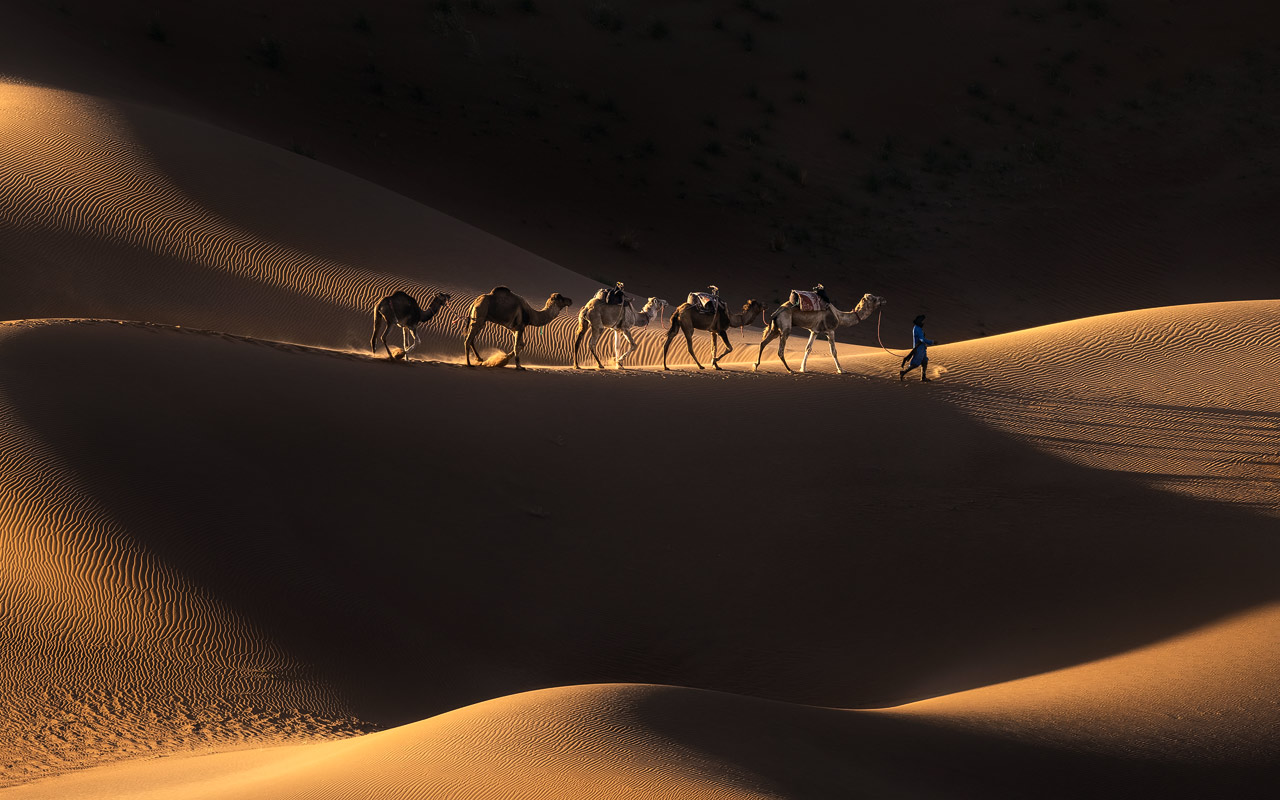
What: North Africa's highest mountain range. Mount Toubkal (4,167m) is the summit. Where: 1.5 hours south of Marrakech. Imlil is the main trekking base. Do: Toubkal treks (2–5 days), valley hikes, Berber village visits, day trips, skiing (Nov–Apr). 5 standout valleys: Ourika, Azzaden, Agoundis, Amizmiz, Lalla Takerkoust. Tours: Day trip from €50 · Multi-day treks from €195. Best months: March–May, September–November.
Atlas Mountains Tours & Treks
| Tour / Trek | Duration | Difficulty | From |
|---|---|---|---|
| Atlas Mountains Day Trip | 1 day | Easy | €50 |
| Toubkal Ascent — 2 Days | 2 days | Moderate–Hard | €150 |
| Toubkal Ascent — 3 Days | 3 days | Moderate | €195 |
| Atlas Valleys Trek — 3 Days | 3 days | Moderate | €195 |
| Toubkal Trek — 4 Days | 4 days | Moderate | €250 |
| Toubkal + Villages — 5 Days | 5 days | Moderate | €330 |
| Imlil to Ourika — 3 Days | 3 days | Moderate | €195 |
| Toubkal + Sahara — 5 Days | 5 days | Moderate–Hard | €450 |
All treks include licensed mountain guides, mules for luggage, meals, and refuge/guesthouse accommodation. For full trek details and booking: Atlas Mountains Trekking page · Mount Toubkal Trekking page.
Mount Toubkal — The Highest Peak
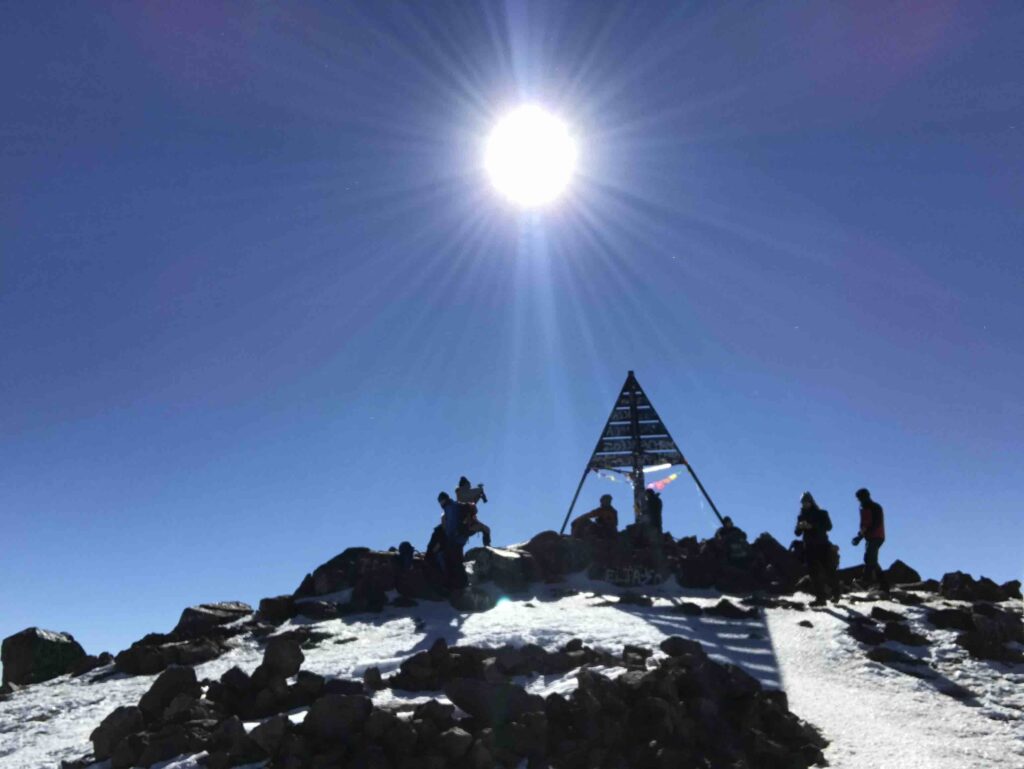
Jebel Toubkal (4,167m) is the highest peak in North Africa and the centrepiece of the High Atlas. It’s a steep hike, not a technical climb — no ropes or climbing gear needed in summer (crampons and ice axes required in winter). The summit rewards you with views spanning the entire Atlas range, the Sahara plains to the south, and on clear days, the Atlantic coast.
From Imlil to summit: Day 1 hikes to the Toubkal Refuge (3,207m, ~5 hours). Day 2 is summit day — 3–4 hours up, 2–3 hours down. The refuge has basic dormitory beds, meals, and (in summer) hot showers. A licensed mountain guide is required above the refuge.
For full Toubkal trek options (2, 3, 4, or 5 days): Mount Toubkal Trekking.
5 Hidden Valleys Worth Exploring
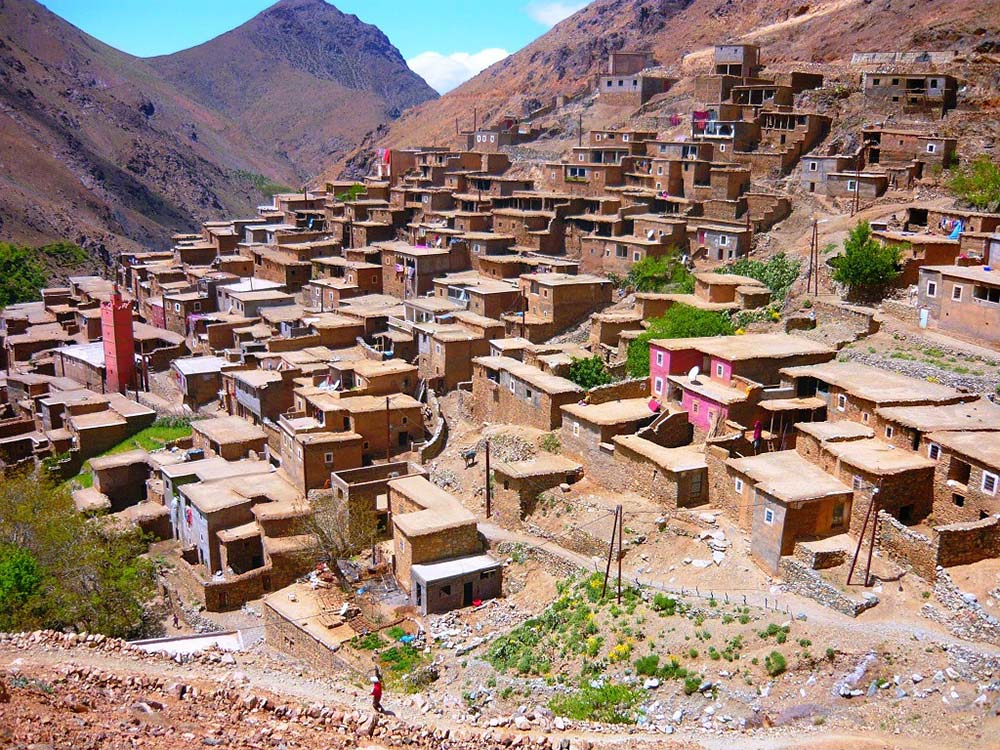
Most visitors only see Imlil and the Toubkal trail. But the Atlas hides stunning valleys that offer quieter, more authentic experiences. Here are five our guides recommend:
| Valley | From Marrakech | Difficulty | Highlights |
|---|---|---|---|
| Ourika Valley | 60km (~1h) | Easy | Waterfalls, Berber villages, family picnics |
| Azzaden Valley | Via Imlil (5–6h walk) | Moderate | Serene, quiet escape, juniper forests |
| Agoundis Valley | Via Ijoukak (30–40h trek) | Advanced | Remote, alternative Toubkal approach |
| Amizmiz | 55km (~1h) | Easy | Tuesday Berber market, authentic culture |
| Lalla Takerkoust | 40km (~45 min) | Easy | Lake views, trekking base, quiet |
Ourika Valley is the easiest — a day trip from Marrakech (from €25) with waterfalls, Berber villages, and refreshing streams. Perfect for families. Azzaden Valley (south of Imlil) is our top pick for solitude — a 5–6 hour walk from Imlil leads to a peaceful retreat. Agoundis Valley is for serious trekkers only — a 30–40 hour route to Toubkal via Ijoukak that few visitors attempt. Amizmiz hosts a vibrant Tuesday Berber market where villagers trade cattle, sheep, and traditional clothing. Lalla Takerkoust offers stunning lake views and serves as an alternative trekking base 23km from Amizmiz.
Berber Culture & Villages
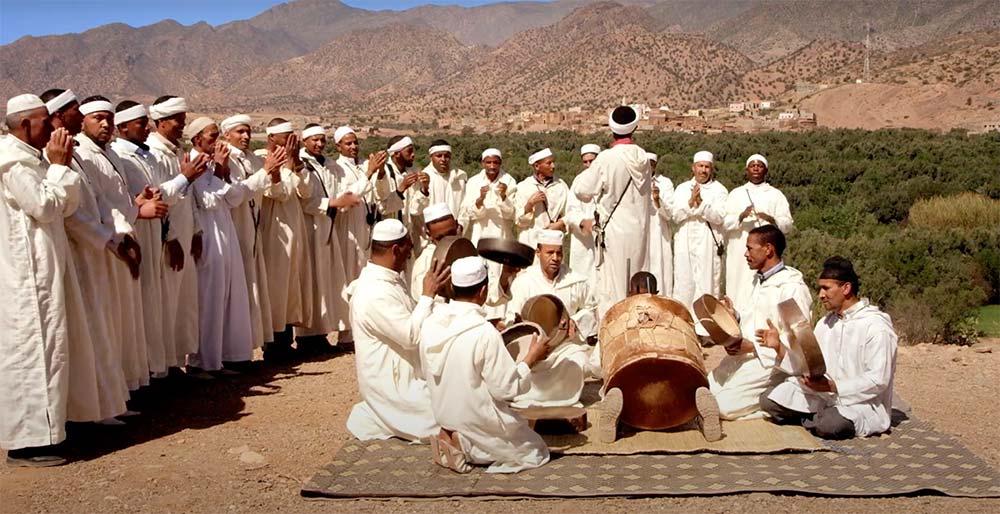
The Atlas Mountains have been home to Amazigh (Berber) communities for centuries. Their culture runs through every aspect of mountain life — the terraced farmhouses clinging to hillsides, the irrigation channels feeding walnut and almond orchards, the warm hospitality that greets every visitor with mint tea and fresh bread.
The Ahouache dance is a traditional group celebration where men and women participate — performed at weddings, harvests, and festivals. Gender roles reflect a working balance: women traditionally manage herding, milking, and weaving, while men handle irrigation, craftwork, and trade. On multi-day treks, you’ll stay in village guesthouses and share meals with families — the most authentic cultural immersion Morocco offers.
For deeper cultural context: Morocco culture and etiquette guide.
Wildlife — Macaques, Leopards & Rare Species
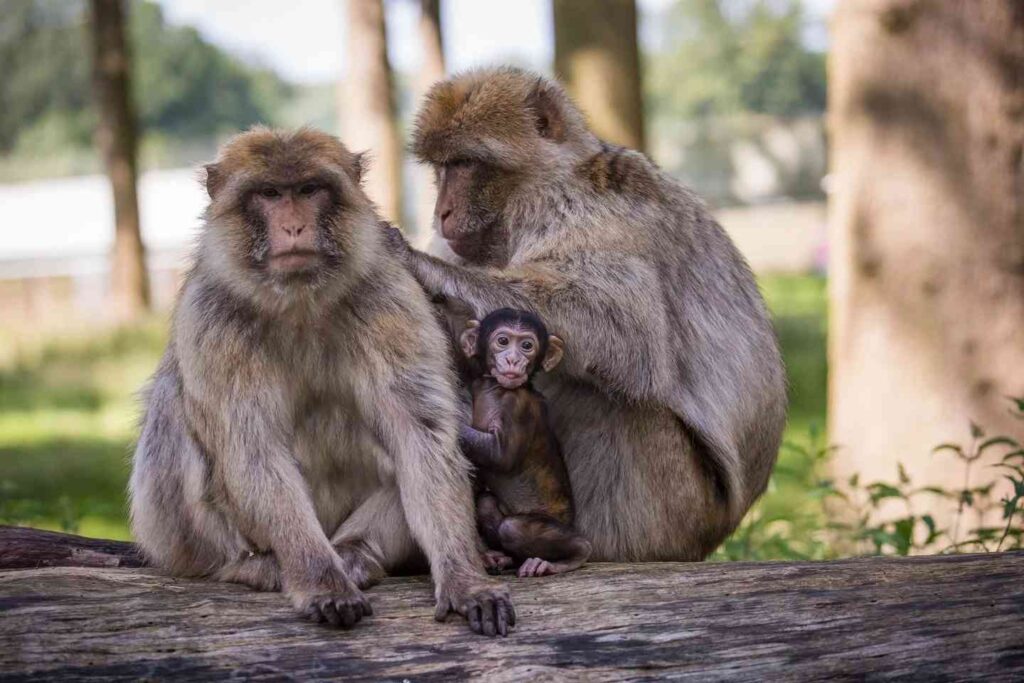
The Atlas Mountains harbour a surprising diversity of wildlife:
Barbary macaques are the headline species — the only wild primates in Africa north of the Sahara. Taller than typical monkeys, with pink faces and short tails, they live in troops in the cedar forests. Best sightings: near Azrou (Middle Atlas) and in Toubkal National Park.
Barbary sheep (aoudad) are hardy mountain dwellers that survive on grass and bushes, extracting water from their diet. You may spot them on higher rocky slopes during quieter treks.
Cuvier’s gazelle — an endangered antelope with ~1,800 individuals remaining worldwide. A cultural symbol of beauty in Arabic tradition. Found in remote High Atlas areas of Morocco, Algeria, and Tunisia.
Barbary leopard — extremely rare, a subspecies of North African leopard. Sightings are exceptional events. The Atlas Mountains are one of its last remaining habitats.
Flora: Blue tussock grass, hedgehog broom (Erinacea anthyllis), wildflowers in spring (March–May), and the cedar forests that shelter the macaques.
Skiing at Oukaïmeden

Most visitors don’t expect snow in Morocco — but from November to April, the High Atlas above 2,000m is blanketed in white. Oukaïmeden (2,600m altitude) is North Africa’s highest ski resort, just 1.5 hours from Marrakech. Basic lifts, equipment rental, and a handful of runs — don’t expect Alpine standards, but the novelty of skiing in Morocco with Atlas panoramas is genuinely unique.
Winter treks to Toubkal require crampons, ice axes, and winter-grade gear — our guides provide or arrange rental in Imlil. The snow-covered mountains are spectacular and far quieter than the busy summer season.
Geology — 200 Million Years of History

The Atlas Mountains formed over 200 million years ago during the same tectonic period as the European Alps. The High Atlas features sedimentary rock formations, fossil deposits (including ancient marine fossils found at high altitude — proof this was once an ocean floor), limestone caves, and dramatic fold structures. You can find trilobite fossils in local markets near Erfoud on the Sahara side of the range.
The Tizi n’Tichka pass (2,260m), which every Merzouga desert tour crosses, cuts through some of the most visually striking geological layers — watch for the colour changes in the rock faces as you ascend.
Stargazing & Sahara Gateway
The High Atlas offers exceptional stargazing — minimal light pollution, high altitude, and clear skies combine for Milky Way visibility that rivals the Sahara. The best spots are above 2,500m around the Toubkal Refuge and remote valley guesthouses.
The southern side of the High Atlas serves as the gateway to the Sahara Desert. The Tizi n’Tichka pass connects Marrakech to the desert route — every Merzouga desert tour crosses the Atlas on Day 1, offering sweeping mountain views before descending into the kasbahs and dunes beyond.
Planning & Getting There
From Marrakech: The foothills start ~45 minutes south. Imlil (main trekking base) is 1.5 hours by road. Ourika Valley is 1 hour. Oukaïmeden (ski resort) is 1.5 hours.
Guides: Licensed mountain guides cost ~300–600 MAD per day depending on the trek. Required above the Toubkal Refuge. Strongly recommended everywhere for navigation, safety, and cultural context. All MDT treks include licensed guides.
Packing: Sturdy hiking boots, layers (temperatures vary dramatically with altitude), sun protection, water, warm jacket for nights above 2,000m. Full list: What to Pack for a Morocco Tour.
Connectivity: Signal is patchy above Imlil. Download offline maps. Morocco SIM card guide.
Best Time to Visit
Spring — Mar to May
15–25°C (valleys). Wildflowers, flowing streams, snow melting on peaks. Ideal trekking. Almond blossoms in March.
Autumn — Sep to Nov
15–25°C. Clear skies, walnut harvest. Excellent visibility for summit views. Fewer trekkers than spring.
Summer — Jun to Aug
35°C+ in valleys, 15–20°C at altitude. Higher treks are comfortable. Avoid low-altitude hikes midday.
Winter — Dec to Feb
Snow above 2,000m. Crampons for Toubkal. Skiing at Oukaïmeden. Spectacular scenery. Cold nights.
Peak: Mount Toubkal (4,167m) — 2–5 day treks, steep hike not technical climb.
Valleys: Ourika (easy), Azzaden (serene), Agoundis (advanced), Amizmiz (market), Lalla Takerkoust (lake).
Tours: Day trip from €50. Multi-day treks from €195. Toubkal+Sahara combo €450.
Wildlife: Barbary macaques, sheep, Cuvier’s gazelle, Barbary leopard (extremely rare).
Skiing: Oukaïmeden (Nov–Apr), 1.5h from Marrakech, North Africa’s highest resort.