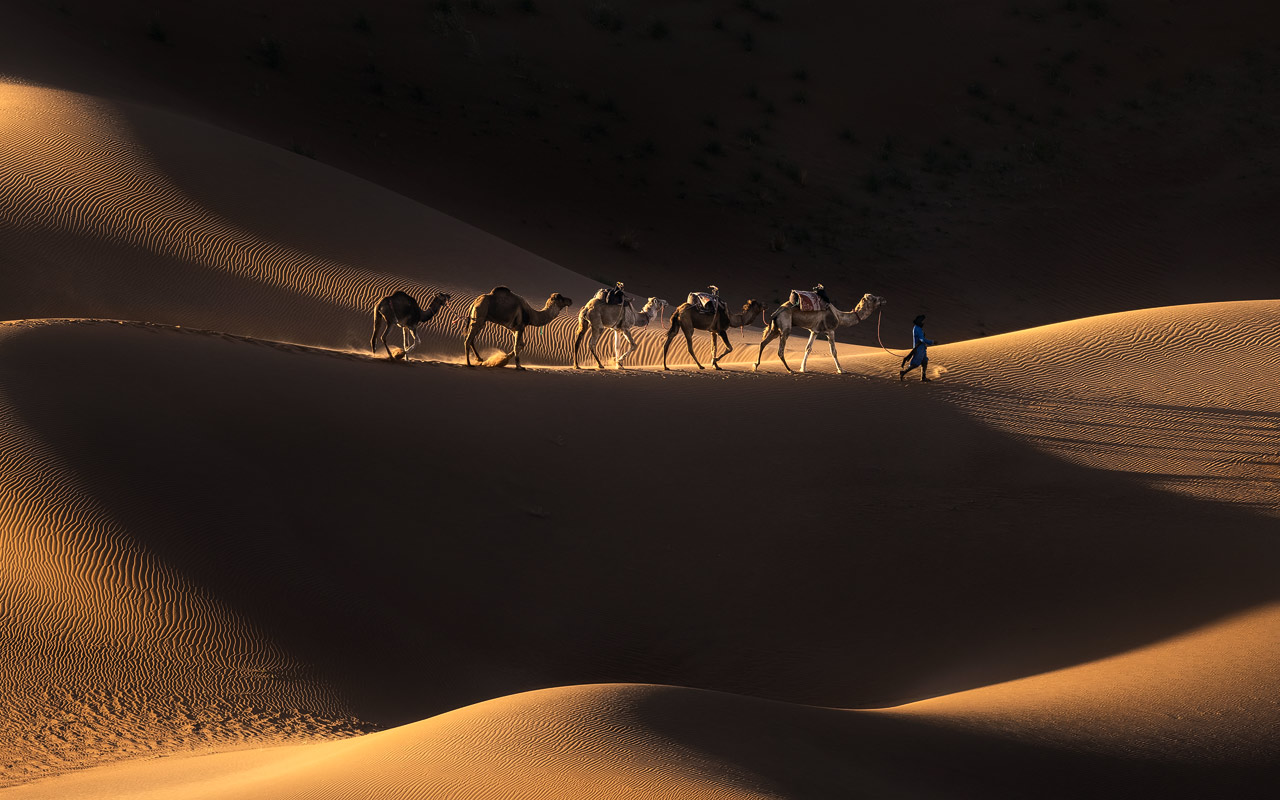
Chefchaouen ("Blue City") is in the Rif Mountains of northern Morocco. Founded 1471 as a fortress, its blue-washed walls stem from a Jewish refugee tradition (blue = sky/heaven). 4 hours from Fes, 3 hours from Tangier. Top attractions: blue medina, Outa el Hammam Square, Kasbah Museum, Great Mosque (unique octagonal minaret), Spanish Mosque sunset hike, Akchour Waterfalls + God's Bridge. 1–3 days ideal. Best: spring (Apr–Jun) and autumn (Sep–Nov). Riads from €20–80/night. MDT: 6-day desert tour from €295 via Sahara + Fes.
Key Facts
| Fact | Detail |
|---|---|
| Location | Rif Mountains, northern Morocco |
| Altitude | ~600 m |
| Population | ~45,000 |
| Nickname | The Blue City / The Blue Pearl |
| Founded | 1471 — as a fortress by Moulay Ali ibn Rachid |
| Why blue? | Jewish refugee tradition (15th C) — blue = sky/heaven |
| Distance | Fes: 4 hrs · Tangier: 3 hrs · Marrakech: 9–10 hrs |
| Best season | Spring (Apr–Jun) and autumn (Sep–Nov) |
| Ideal stay | 1–3 days |
| MDT tour | 6-day Marrakech → Sahara → Fes → Chefchaouen — from €295 |
Why Is Chefchaouen Blue?
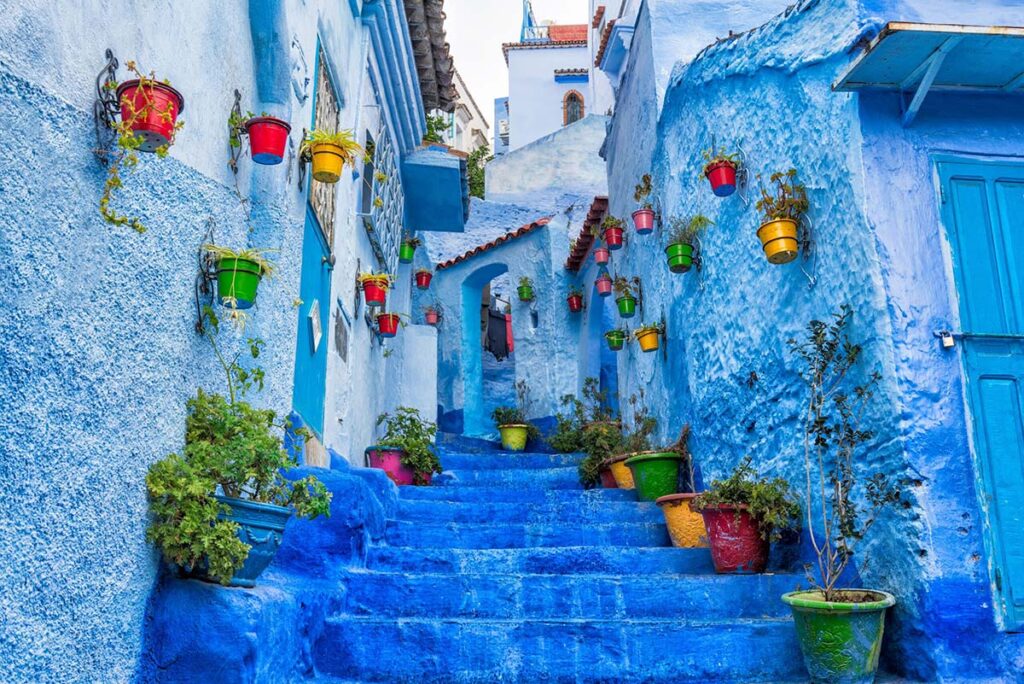
The most widely accepted theory is that Jewish refugees from Spain painted the walls blue in the 15th century, as blue symbolises the sky and heaven in Jewish tradition — a reminder of God’s presence. Other theories suggest the blue repels mosquitoes or keeps houses cool in summer. The truth is likely a blend of all three: spiritual tradition, practical benefit, and aesthetic choice.
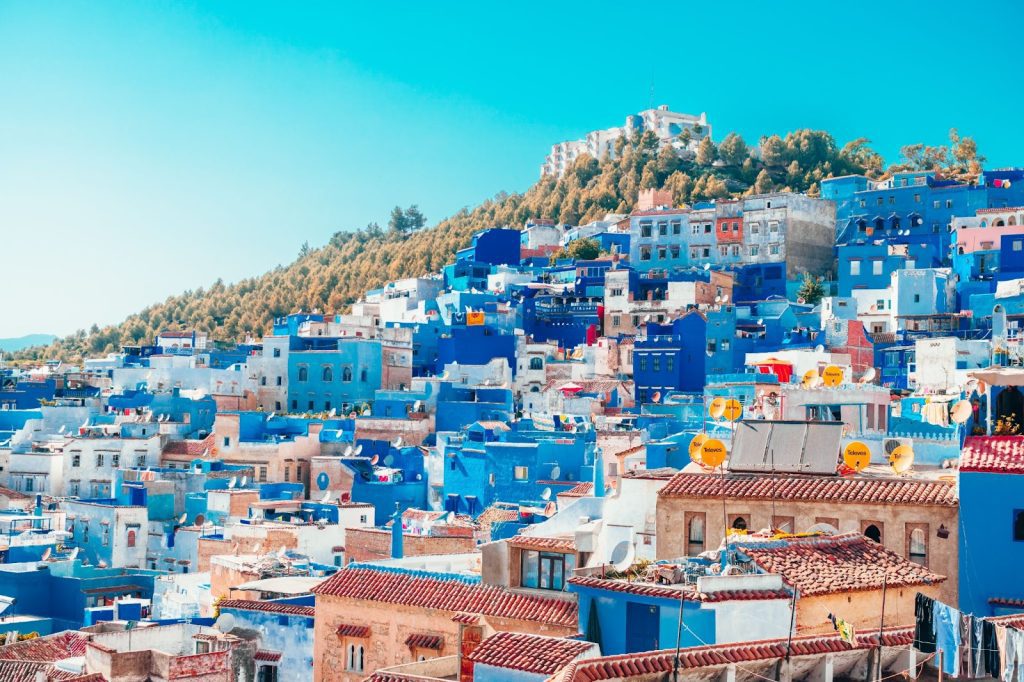
Regardless of origin, the tradition has been maintained for centuries and is now central to Chefchaouen’s identity. Residents actively repaint the blue walls — it is a point of civic pride, not just a tourist attraction. The shades vary from street to street: cerulean, cobalt, powder blue, indigo, sky blue — creating the layered palette that makes the city so photogenic. The blue looks most vivid in morning and late-afternoon light.
Things to Do
| Activity | Time | Notes |
|---|---|---|
| Wander the blue medina | 2–4 hrs | Get lost in the alleys — that’s the point. Best light: morning + late PM. |
| Outa el Hammam Square | 30–60 min | Main square. Cafés, Kasbah entrance. People-watching spot. |
| Kasbah Museum | 45 min | Fortress, gardens, ethnographic collection. ~10 MAD entry. |
| Great Mosque exterior | 15 min | Unique octagonal minaret — the only one in Morocco. Non-Muslims cannot enter. |
| Spanish Mosque sunset hike | 20 min up | Best sunset viewpoint. Panoramic view of the city + Rif Mountains. |
| Ras Elma River walk | 30 min | Source of the city’s fresh mountain water. Locals wash wool here. |
| Akchour Waterfalls day trip | Full day | 7 cascades + God’s Bridge. 45-min drive + 1.5–2 hr hike. See below. |
| Crafts shopping | 1–2 hrs | Wool blankets, blue pottery, woven bags, Berber silver jewellery. |
| Eat local specialties | Per meal | Bissara (fava bean soup), rghaif + goat cheese, tagine. ~30–60 MAD. |
| Rooftop café | 30–60 min | Mint tea with blue medina views. Several around Outa el Hammam. |
The Medina & Landmarks
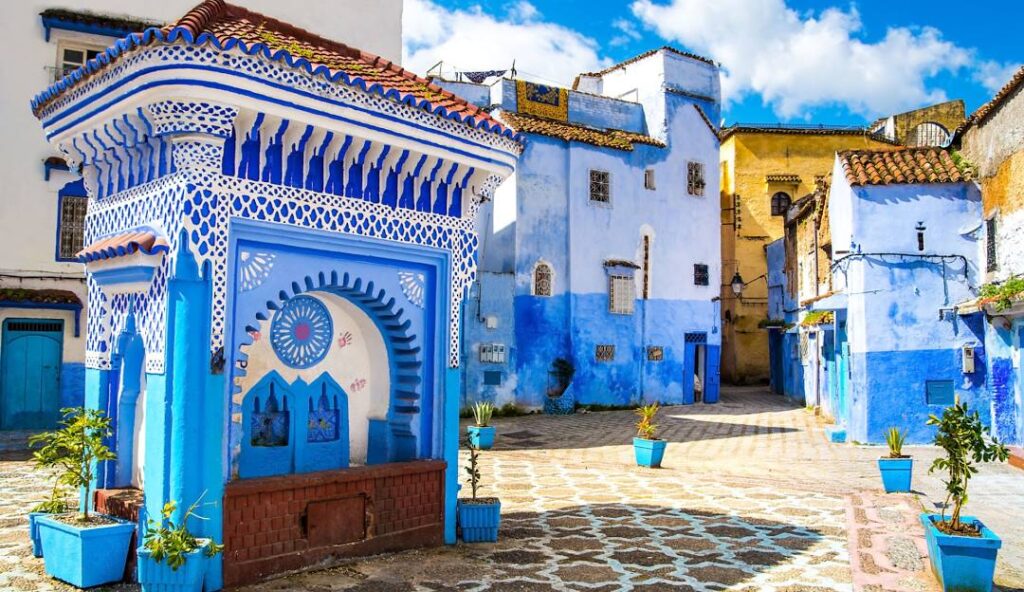
Outa el Hammam Square is the heart of the city — a large, tree-shaded plaza surrounded by cafés and restaurants, with the Kasbah on its western side. The Kasbah (built in the 15th century alongside the city) houses a museum with an ethnographic collection, a traditional Andalusian garden, and a small art gallery. Entry: ~10 MAD. The square is the best people-watching spot in the city.
The Great Mosque stands at the edge of the square, distinguished by its octagonal minaret — unique in Morocco, where square minarets are the norm. Non-Muslims cannot enter, but the exterior and its unusual tower are worth seeing.
The Spanish Mosque sits on a hill east of the medina — a 20-minute walk up a well-worn trail. Built during the Spanish colonial period (early 20th century), it’s no longer used for worship but offers the best panoramic view of Chefchaouen: the blue medina below, the Rif Mountains behind, and the valley stretching to the horizon. Go at sunset — the light on the blue walls is extraordinary. Bring a picnic.
The Ras Elma River, just outside the medina walls, is the source of Chefchaouen’s fresh mountain water. Locals use the riverside area for washing wool and carpets — a living scene of traditional life. The path along the river is peaceful and makes a pleasant short walk.
Day Trips from Chefchaouen
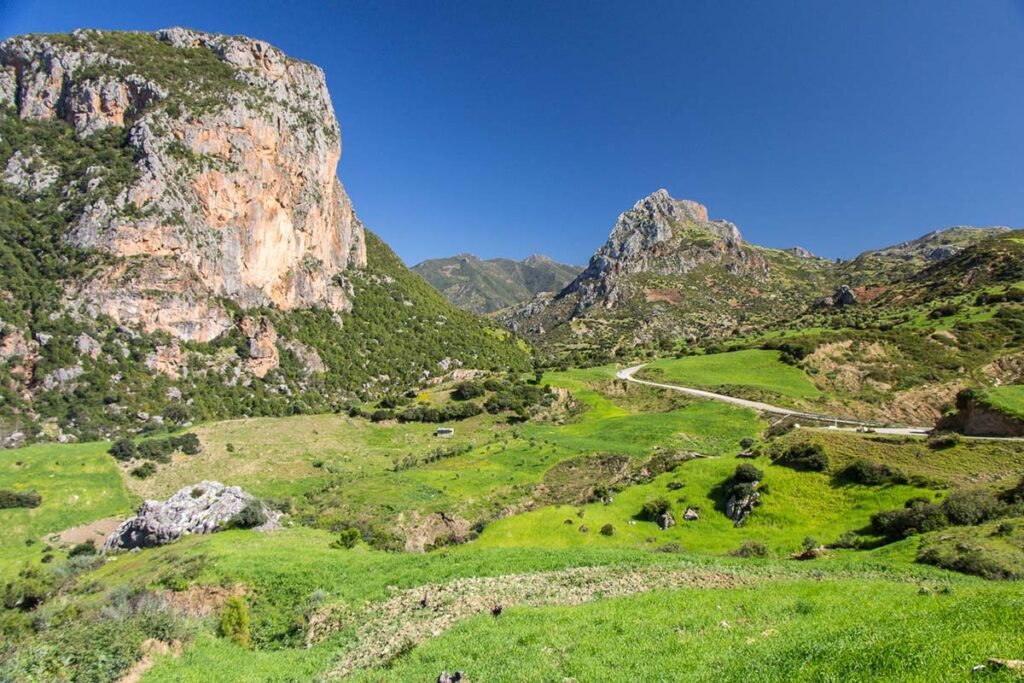
Akchour Waterfalls + God’s Bridge: In Talassemtane National Park, ~45 minutes’ drive from the city. Two trails: one to the waterfalls (1.5–2 hrs each way, following the river through lush terrain — 7 cascades, the tallest ~20 m) and one to God’s Bridge (Pont de Dieu — a dramatic natural rock arch spanning a gorge, ~45 min each way). Both are spectacular. Best in spring when water flow peaks. Bring sturdy shoes, water, sun protection. A full-day excursion — arrange a taxi or hire a guide from Chefchaouen.
Tetouan + Mediterranean beaches: 1 hour north. Tetouan’s medina is a UNESCO World Heritage Site, known for Andalusian-influenced architecture — whitewashed walls, ornate doorways, and a distinct Spanish feel. Beyond Tetouan, the beaches of Martil and Cabo Negro offer Mediterranean swimming and seafood restaurants. A good half-day or full-day trip.
Ouazzane: 1.5 hours south. A quieter town known for its religious significance, beautiful olive groves, and traditional atmosphere. Less visited by tourists — a different perspective on Rif Mountain life.
Food & Shopping
Food: Chefchaouen’s signature dish is bissara — a thick, warming fava bean soup drizzled with olive oil and cumin, served with bread. A Chefchaouen specialty you won’t find done better anywhere else in Morocco. Also try rghaif (flaky flatbread) with local goat cheese and mountain honey — a breakfast staple. Standard Moroccan dishes are excellent too: tagine (lamb or chicken, ~40–60 MAD), couscous, and harira. Mint tea is everywhere — try it on a rooftop terrace overlooking the blue rooftops. Meals cost ~30–60 MAD (€3–6) at local restaurants.
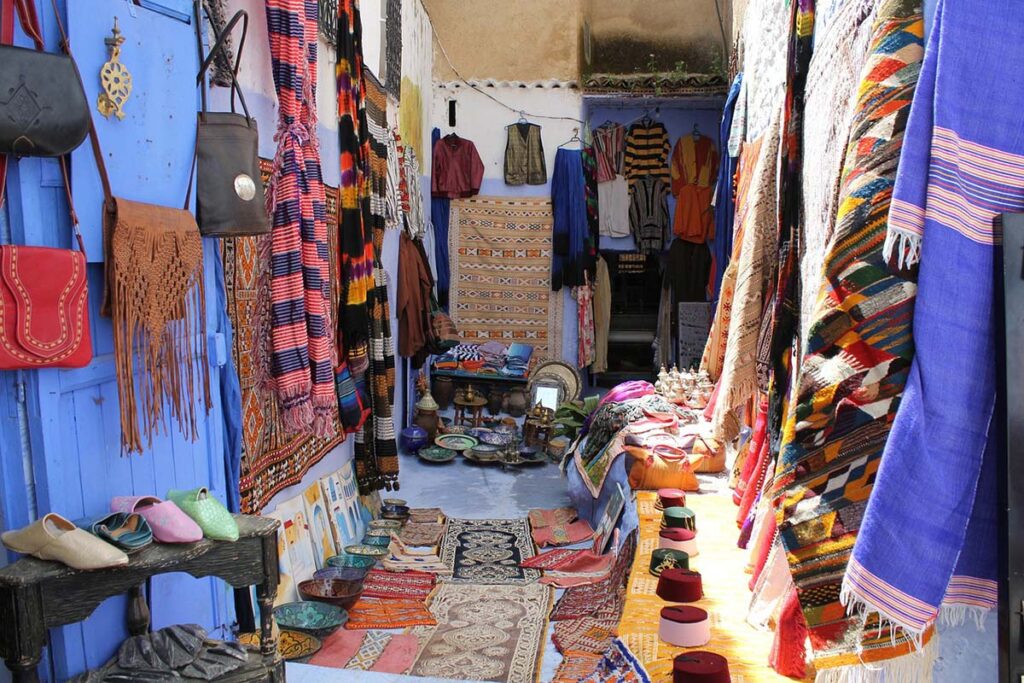
Shopping: The medina’s shops sell wool blankets and woven bags (Chefchaouen is famous for its Rif Mountain weavings), blue pottery and ceramics (mirroring the city’s walls), leather goods (bags, belts, slippers), and Berber silver jewellery with geometric Amazigh designs. Pottery: ~50–200 MAD. Blankets: ~200–500 MAD. Prices are lower than Marrakech, and bargaining is expected but gentler. The crafts here are genuinely local — many artisans work in the shop itself.
How to Get There
From Fes: ~4 hours. CTM or Supratours bus (~75 MAD), or grand taxi (~100 MAD/person, shared). The drive crosses the Rif Mountains — scenic but winding. This is the most common route for independent travellers.
From Tangier: ~3 hours. Bus or grand taxi. A good option if flying into Tangier Ibn Battouta Airport (TNG) — the nearest airport to Chefchaouen.
From Marrakech: ~9–10 hours direct (bus or car) — not recommended as a direct journey. The best way is MDT’s 6-day desert tour which travels through the Sahara, Fes, and arrives in Chefchaouen on Days 5–6 — turning the distance into an adventure. From €295.
Within Chefchaouen: The medina is entirely walkable — the city is compact. No car needed. Taxis available for day trips (Akchour, Tetouan).
Where to Stay
Riads and guesthouses (€20–80/night) are the best option — traditional Moroccan houses with blue-painted courtyards, rooftop terraces, and mountain views. Stay inside the medina for the full experience — you’ll wake up surrounded by blue walls. Budget riads start at ~€20; beautifully restored ones with terrace views run €50–80. Hotels and hostels are also available in and around the medina. For more on the riad experience, see our riad guide.
Best Time to Visit
Spring (April–June): The best season. Mild (15–25°C), clear skies, green Rif Mountains, wildflowers, and the blue walls vivid in the spring light. Manageable crowds.
Autumn (September–November): Equally pleasant. Golden light, warm days (18–26°C), fewer tourists than spring. Excellent for hiking.
Summer (July–August): Hot (30°C+), and the city fills with Moroccan and international tourists. Evenings are pleasant. Visit early morning or late afternoon.
Winter (December–February): Mild but can be rainy (10–16°C). The quietest season — atmospheric, great for photography, and the medina feels most local.
MDT Tour to Chefchaouen
Chefchaouen is too far from Marrakech for a day trip (9–10 hrs each way). The best way to reach it from Marrakech is MDT’s 6-day desert tour: Marrakech → Atlas Mountains → Sahara Desert (camel trek + desert camp) → Fes → Chefchaouen. You see the best of Morocco in one journey — desert, imperial cities, and the Blue City. A 6-day Casablanca variant is also available.
| Tour | Duration | Route | From |
|---|---|---|---|
| Marrakech → Chefchaouen | 6 days | Marrakech → Sahara → Fes → Chefchaouen | €295 |
| Casablanca → Chefchaouen | 6 days | Casablanca → Sahara → Fes → Chefchaouen | €345 |
Practical Tips
Cash: ATMs are available in the new town (outside the medina), but bring MAD with you — many medina shops don’t accept cards. Change money in Fes or Tangier before arriving if possible.
Kif offers: Chefchaouen is in the Rif, Morocco’s traditional cannabis-growing region. You will likely be offered kif (cannabis). Politely decline — buying or possessing it is illegal for tourists regardless of local tolerance.
Photography: The city is incredibly photogenic, but ask before photographing people — especially women and elderly residents. Some locals are tired of being treated as props. Respect goes a long way.
Shoes: The medina is all cobblestones and uneven steps — wear comfortable, grippy shoes. Flip-flops are a bad idea on the steep alleys.
Blue City: Founded 1471, Rif Mountains, ~600 m altitude, ~45,000 people.
Why blue: Jewish refugee tradition (15th C) — blue = sky/heaven. Maintained as civic pride.
Top sights: Blue medina, Kasbah, Great Mosque, Spanish Mosque sunset, Akchour Waterfalls.
Day trips: Akchour + God’s Bridge, Tetouan (UNESCO) + beaches, Ouazzane.
Food: Bissara (fava bean soup), rghaif + goat cheese, tagine. Meals ~30–60 MAD.
Getting there: Fes 4 hrs, Tangier 3 hrs, or MDT 6-day desert tour from €295.
Stay: 1–3 days. Riads €20–80. Best: spring + autumn.