A riad (from Arabic ryad, "garden") is a traditional Moroccan house with a central courtyard or garden, inward-facing rooms, and a rooftop terrace. Walls feature zellige tilework, tadelakt plaster, and carved cedar. Typically 5–10 rooms, family-run, with home-cooked meals. Not the same as a dar — a dar has a courtyard but no garden. Prices: €30 budget → €100–300 mid-range → €300–600+ luxury. Best cities: Marrakech, Fes, Essaouira, Chefchaouen. Tours: MDT picks up from your riad for all Marrakech tours and desert departures.
Definition & Architecture
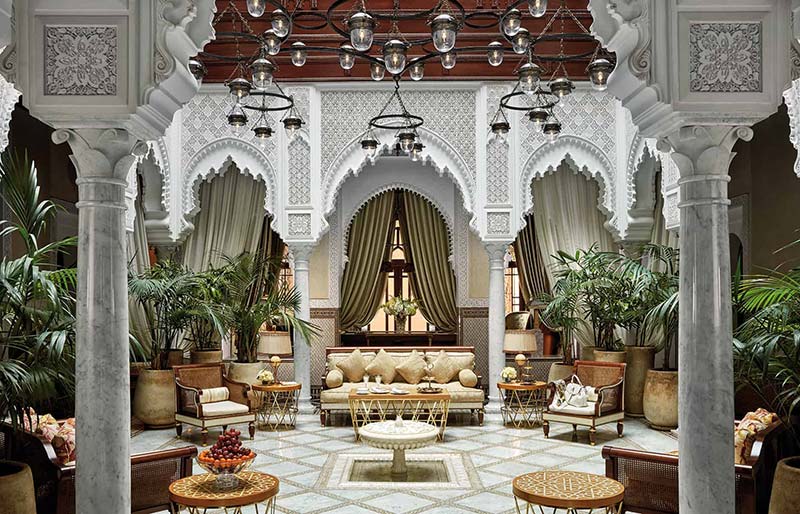
The word riad comes from Arabic ryad (رياض), meaning “garden”. A riad is a traditional Moroccan house or palace built around a central courtyard with a garden — typically featuring trees, plants, a fountain, or a small pool. All rooms face inward toward this courtyard, with blank exterior walls facing the street. This design reflects Islamic principles of family privacy: from outside, a riad looks like an unremarkable wall with a door; inside, it’s an oasis of light, greenery, and craftsmanship.
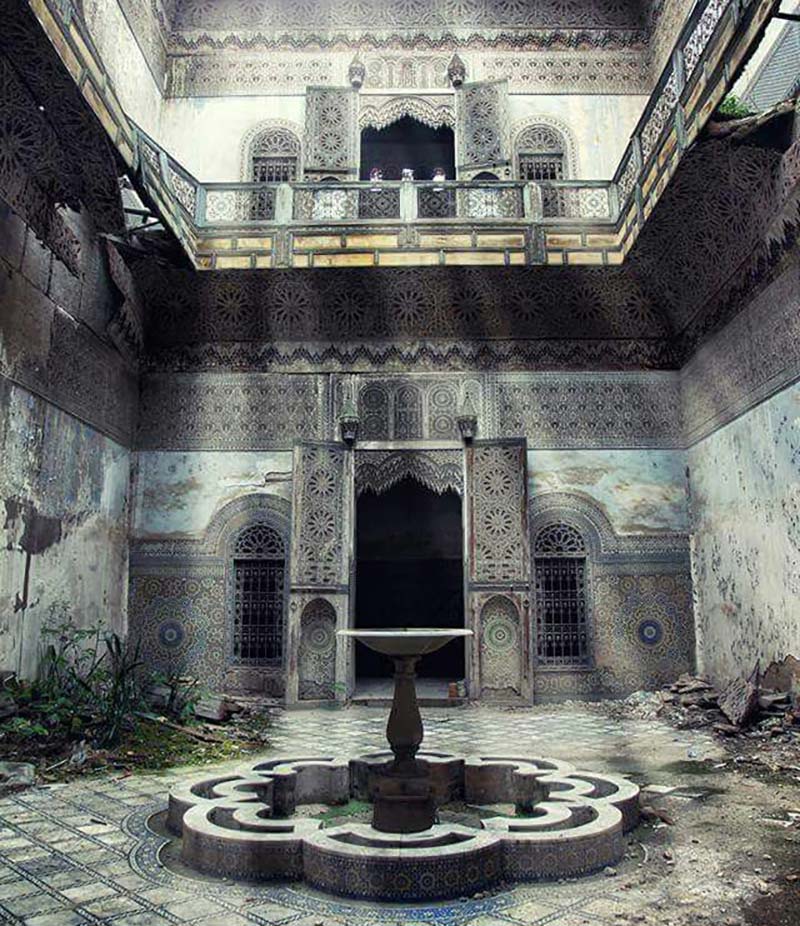
Architectural features: Zellige (hand-cut geometric mosaic tilework), tadelakt (polished lime plaster, waterproof and lustrous), carved cedar (doors, window screens, ceilings), stucco carvings (geometric and floral patterns), and rooftop terraces with views over the medina. Most riads are 2–3 storeys with rooms arranged around the courtyard on each level. The ground floor typically has communal areas (salon, dining room); upper floors have bedrooms.
Riad vs Dar — The Key Distinction
Visitors often see both terms used interchangeably, but they’re technically different:
Riad = traditional house with a central courtyard that includes a garden — trees, plants, greenery. The word literally means “garden.” These are typically larger, more elaborate properties.
Dar (Arabic for “house”) = traditional house with a central courtyard but no full garden — often just a tiled patio, a light well, or a simple open space. Dars tend to be smaller and more modest.
In practice, many guesthouses marketed as “riads” are technically dars. The tourism industry uses “riad” as a catch-all for any traditional Moroccan guesthouse with a courtyard. Both offer the same inward-facing architecture, rooftop terrace, and intimate atmosphere — the distinction is about the garden, not the quality of the stay.
Riad vs Hotel — Compared
| Feature | Riad | Hotel |
|---|---|---|
| Architecture | Traditional courtyard, zellige, tadelakt | Modern, standardised design |
| Atmosphere | Intimate, cosy, culturally immersive | Professional, sometimes impersonal |
| Rooms | 5–10, each uniquely decorated | 50–300+, often identical layout |
| Location | Inside the medina (old town) | Medina or modern districts (Guéliz, Hivernage) |
| Service | Personalised, family-run | Professional, formal |
| Food | Home-cooked tagine, couscous, pastilla | Buffet or restaurant-style |
| Privacy | Quiet, inward-facing, secluded | Public lobbies, pools, shared spaces |
| Price | €30–600+ (budget to luxury) | €50–500+ (mid to high-end) |
| Hammam | Many have in-house hammam | Spa facilities in 4-5★ hotels |
| Best for | Culture, romance, authenticity | Families needing space, accessibility, pools |
What to Expect on Arrival
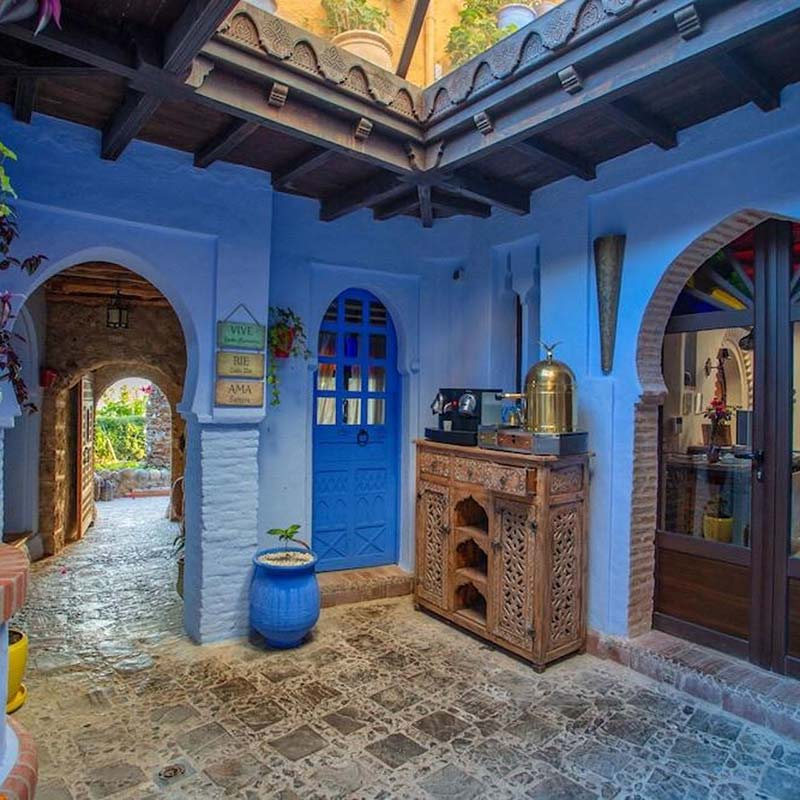
Getting there: Riads are inside medinas — ancient walled cities with narrow alleys where cars can’t enter. Your riad will send someone to meet you at a nearby landmark or taxi drop-off point and walk you in. Luggage is carried by hand or on a cart. This is normal — don’t worry about finding the door yourself.
Check-in: You’ll be welcomed with mint tea and Moroccan pastries in the courtyard or salon — this is traditional hospitality, not a sales pitch. The owner or manager will show you around and explain meal times, rooftop access, and local tips.
Rooms: Each room is individually decorated — expect hand-painted ceilings, zellige-tiled bathrooms, carved wooden furniture. Most have en-suite bathrooms with tadelakt walls. Many riads have a hammam (traditional steam bath) on-site — either private or shared. Rooftop terraces are where breakfast is typically served, with views over the medina rooftops.
Meals: Many riads offer dinner on request (book by morning) — home-cooked tagine, couscous, or pastilla prepared by the family cook. This is often the best meal you’ll eat in Morocco. Breakfast is almost always included: bread, pastries, olive oil, honey, jam, eggs, fruit, fresh-squeezed orange juice, mint tea, and coffee.
Prices & Booking Tips
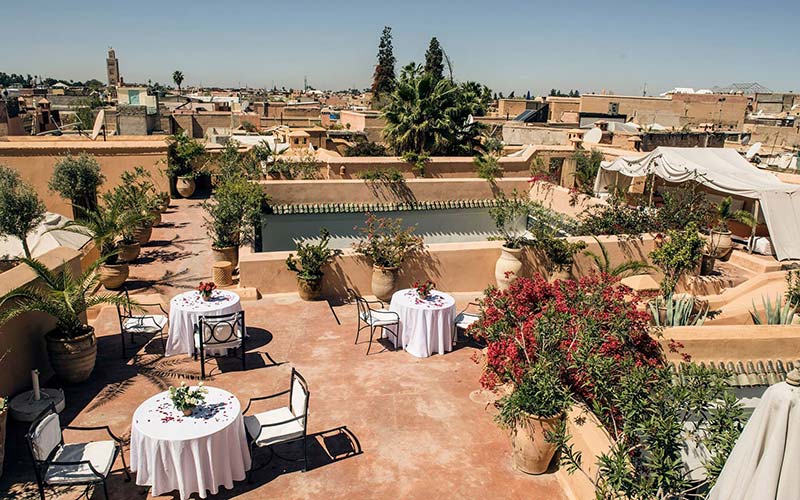
Budget (€30–60/night): Basic but charming. Traditional architecture, simple furnishings, shared or private bathroom. Perfect for budget travellers who want authenticity over luxury. Breakfast usually included.
Mid-range (€100–300/night): Air conditioning, dipping pool, rooftop terrace, elaborately decorated rooms with zellige and carved wood. More spacious, often with hammam access. The sweet spot for most visitors.
Luxury (€300–600+/night): Suites, full-service spa, hammam, swimming pool, gourmet restaurant, lush gardens. The full palatial experience — think carved stucco ceilings, private courtyards, and butler service.
Best Riad Cities
Marrakech
The largest and most diverse riad selection in Morocco — from €30 budget B&Bs to €600+ palaces. Concentrated in the medina near the souks and Jemaa el-Fnaa. Marrakech riads tend to be the most elaborately restored, with lush courtyard gardens, pools, and in-house hammams. The sheer volume of options means competition keeps quality high and prices reasonable.
Fes
The most historically authentic riad experience. Many Fes riads occupy buildings that are several centuries old — thick walls, original tilework, quiet courtyards. The medina is larger and more labyrinthine than Marrakech’s, so choosing a riad with good directions (or a meet-and-greet service) is essential. Fewer tourist crowds, more local atmosphere.
Essaouira
Coastal riads with a breezy, relaxed atmosphere. Lighter architectural style than inland cities — white walls, blue accents, sea-facing terraces. Essaouira’s medina is compact and easy to navigate, making riad-finding less stressful. Many riads here are run by European expats and offer a blend of Moroccan and international style.
Chefchaouen
Blue-painted riads in Morocco’s most photogenic town. Smaller, more modest than Marrakech riads, but with incredible charm — mountain views, rooftop terraces overlooking blue rooftops, quiet courtyards. The Blue City draws a younger, more artistic crowd. Budget riads here are particularly good value.
MDT Tour Connection
We pick you up from your riad. For all Marrakech-departing tours — desert tours, day trips, and trekking — MDT collects guests directly from their riad or the nearest accessible point in the medina. Just share your riad name and address when booking.
On multi-day desert tours, accommodation along the route includes riad-style guesthouses and kasbah-hotels in towns like Ouarzazate, Dades, and Tinghir — the same courtyard architecture, traditional décor, and home-cooked meals. In the Sahara itself, you sleep in a desert camp (standard or luxury).
| Tour | Duration | Pick-Up | From |
|---|---|---|---|
| 3-Day Merzouga (Shared) | 3 days | Your Marrakech riad | €95 |
| 3-Day Merzouga (Private) | 3 days | Your Marrakech riad | €195 |
| Guided Marrakech Walking Tour | Half-day | Your Marrakech riad | €20 |
| Ouarzazate Day Trip | 1 day | Your Marrakech riad | €21 |
Riad: Traditional Moroccan house with central courtyard garden. Arabic ryad = garden.
Dar: Same architecture but no garden — just a courtyard. Tourism uses “riad” for both.
Features: Zellige, tadelakt, carved cedar, rooftop terrace, 5–10 rooms, family-run.
Prices: €30–60 budget, €100–300 mid, €300–600+ luxury. Book direct for best rates.
Best cities: Marrakech (largest), Fes (oldest), Essaouira (coastal), Chefchaouen (blue).
MDT: We pick you up from your riad for all tours — just share the name when booking.