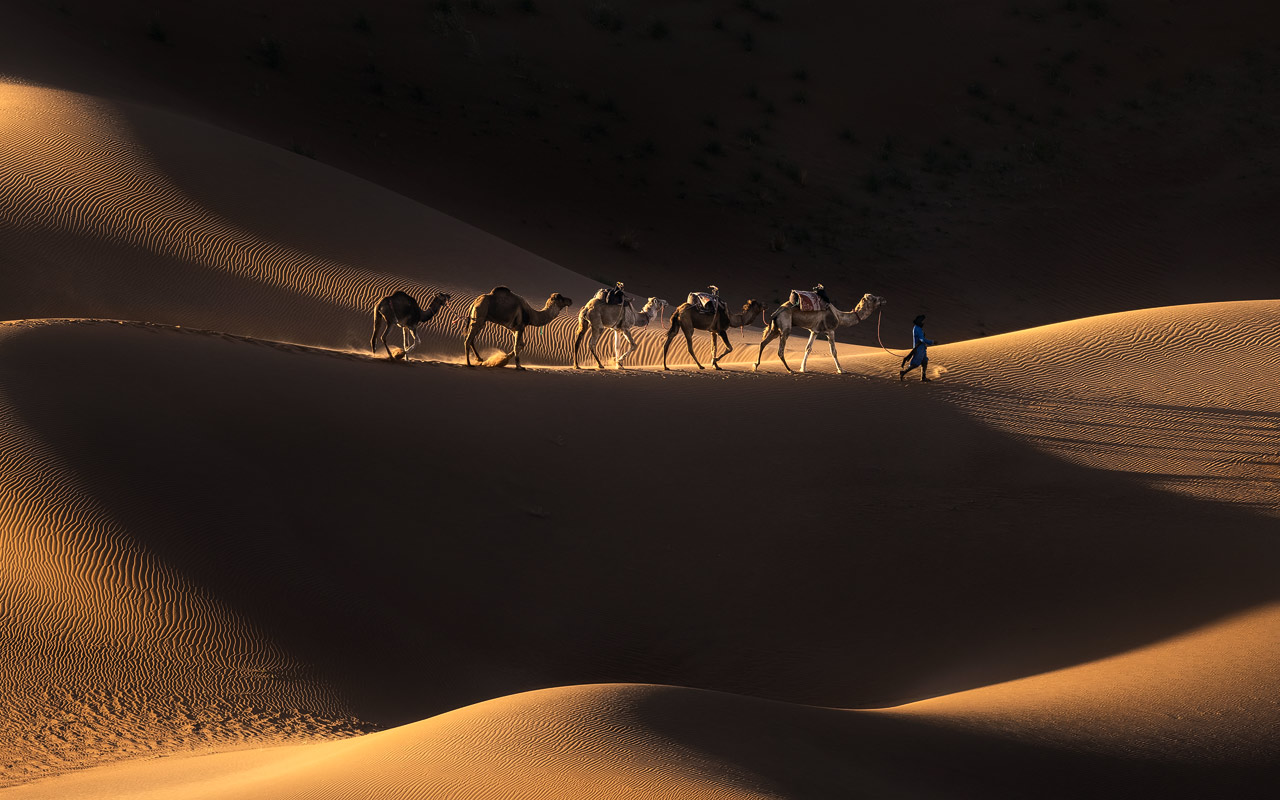
Essaouira is an Atlantic coastal town 190 km (2.5 hours) west of Marrakech. The medina is a UNESCO World Heritage Site — whitewashed buildings with blue shutters. Known as the "Wind City of Africa" — Morocco's kitesurfing and windsurfing capital. The fish market is a must: choose your catch, grilled on the spot (~30–50 MAD). The Gnawa Music Festival (June) is one of Morocco's biggest cultural events. Founded in the 18th century by Sultan Mohammed III. Signature craft: thuya woodwork. Best: spring + autumn. MDT: shared day trip from €19 · private from €27.
Key Facts
| Fact | Detail |
|---|---|
| Location | Atlantic coast, western Morocco |
| Distance from Marrakech | 190 km / ~2.5 hours by road |
| Nickname | Wind City of Africa |
| UNESCO | Medina of Essaouira — World Heritage Site |
| Founded | 18th century by Sultan Mohammed III (formerly Mogador) |
| Population | ~80,000 |
| Best season | Spring (Mar–May) and autumn (Sep–Nov) |
| Gnawa Festival | June — free outdoor concerts across the medina |
| Wind sports | Kitesurfing + windsurfing, Apr–Nov best wind |
| Signature craft | Thuya woodwork — boxes, furniture, carvings |
| Beach | Miles-long sandy beach, camel rides, surfing |
| MDT day trip | Shared from €19 · Private from €27 |
Things to Do
| Activity | Time | Notes |
|---|---|---|
| Wander the UNESCO medina | 1–2 hrs | Whitewashed walls, blue shutters, artisan shops, spice stalls. |
| Skala de la Ville | 30 min | 18th-century fortress. Panoramic Atlantic views. Cannon-lined ramparts. |
| Moulay Hassan Square | 30–60 min | Central square. Cafés, performers, terrace dining. |
| Fish market lunch | 45 min | Choose your catch, grilled on the spot. ~30–50 MAD. The #1 Essaouira experience. |
| Beach walk + camel ride | 1–2 hrs | Miles-long sandy beach. Camel rides ~150 MAD. Horseback also available. |
| Kitesurfing / windsurfing | 2–3 hrs | Lessons from ~€40–60. Best wind: Apr–Nov. Several schools on the beach. |
| The port | 30 min | Blue fishing boats, daily catch, seagulls. Best early morning. |
| Argan cooperative visit | 30 min | En route from Marrakech. Traditional oil production, tasting + buying. |
| Diabat village + Jimi Hendrix | 1 hr | 3 km south. Hendrix stayed 1969. Ruins of Palais des Contes. Quiet walk. |
| Thuya wood workshops | 30 min | Essaouira’s signature craft. Boxes, tables, chess sets. Inside the medina. |
The Medina & Landmarks
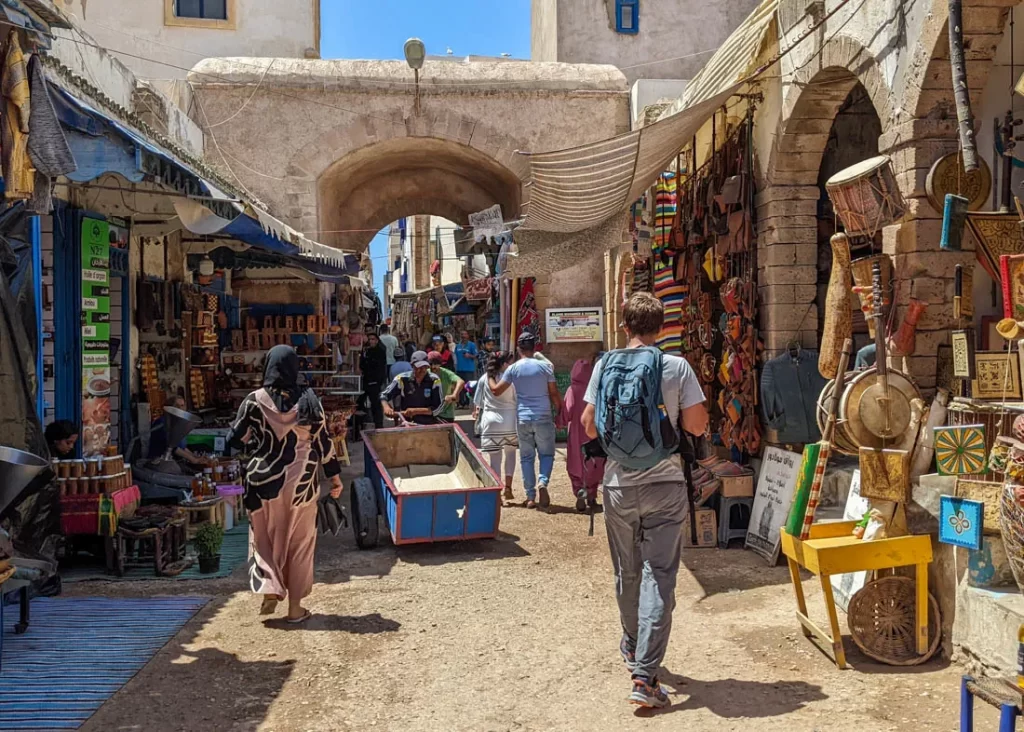
The medina of Essaouira is a UNESCO World Heritage Site — a compact, walkable quarter of whitewashed buildings with bright blue shutters, narrow streets, and artisan workshops. Unlike the intense souks of Marrakech, Essaouira’s medina is calmer and more relaxed, with less aggressive selling and a gentler pace. The blend of Moroccan and European architecture reflects the town’s diverse past — Portuguese, French, Jewish, Berber, and Arab influences are all visible in the buildings and layout.
Skala de la Ville: The 18th-century fortress ramparts line the Atlantic waterfront with cannon-lined battlements and sweeping ocean views. Built to defend the port, the Skala is now the most photographed spot in the city — especially at sunset, when the light on the whitewashed walls and crashing waves is extraordinary. Free entry.
Moulay Hassan Square: The central meeting point of the medina — a broad, tree-lined plaza surrounded by cafés, restaurants, and terrace dining. Street performers, musicians, and juice vendors create a lively atmosphere. The square connects the medina to the port and the beach.
The Port: Essaouira’s working fishing port is a hive of activity — blue wooden boats, piles of fresh catch, seagulls, and fishermen mending nets. Visit in the early morning for the most authentic scene. The adjacent fish market is where the real magic happens.
Seafood & Food
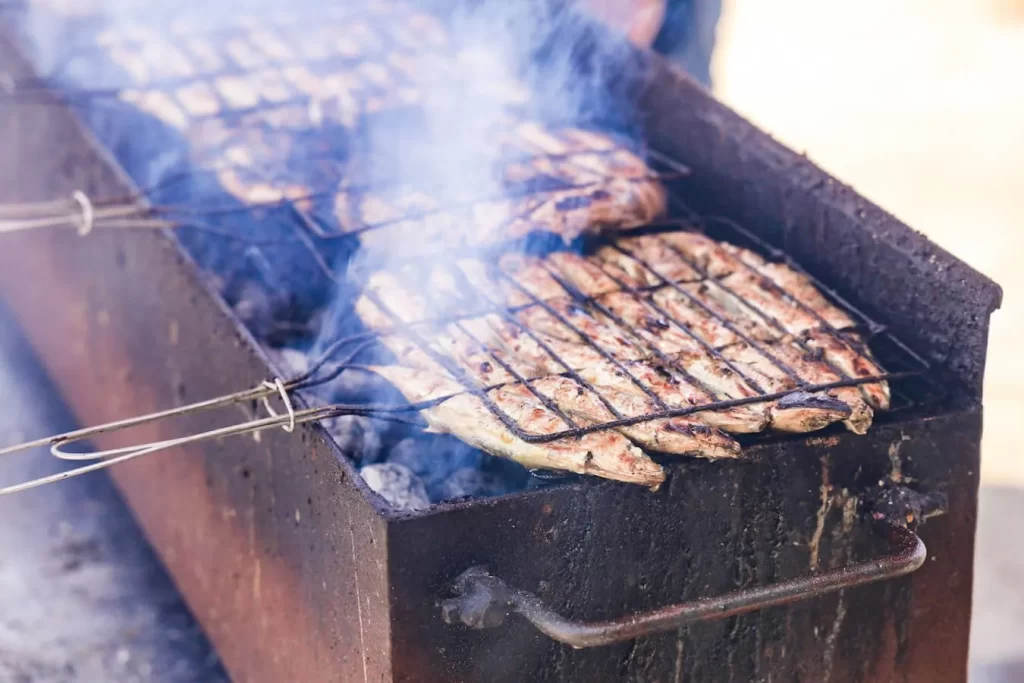
The fish market near the port is Essaouira’s #1 food experience: walk along the stalls, choose your fish (sardines, prawns, calamari, sea bream, lobster), and have it grilled on the spot with lemon, salt, and cumin. A full plate: ~30–50 MAD (€3–5). It’s fresh, fast, and unforgettable — nothing else in Morocco compares.
Beyond the fish market: sardines (Essaouira’s staple), pastilla (savoury seafood pastry), seafood tagine, and chermoula-marinated fish (herbs, lemon, garlic, spices). Restaurant Taros — a rooftop restaurant on Moulay Hassan Square — is excellent for sunset drinks and seafood. Budget meals at local restaurants run ~40–80 MAD.
Wind City — Kitesurfing & Windsurfing
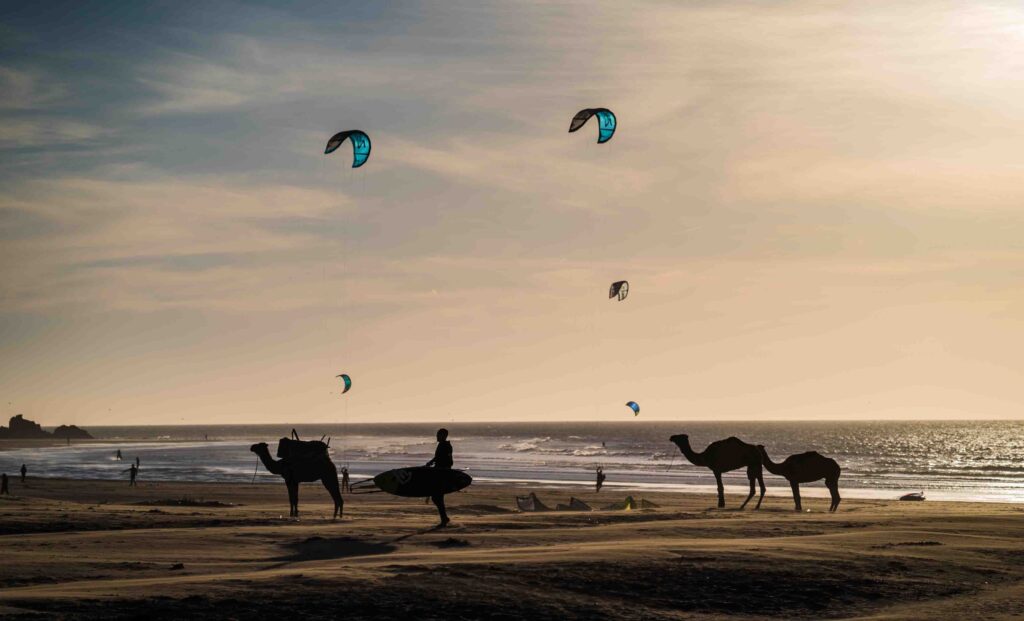
Essaouira is called the “Wind City of Africa” for a reason: strong, consistent Atlantic trade winds blow year-round, with the best conditions from April to November. The miles-long beach has dedicated zones for kitesurfing and windsurfing, with several schools offering lessons for beginners (~€40–60 per session). Even if you don’t kitesurf, watching the kites and sails against the Atlantic backdrop is part of the Essaouira experience. The wind also keeps the town cooler than Marrakech — a welcome relief in summer.
History & Culture
Essaouira was founded in its current form in the 18th century by Sultan Mohammed III, who commissioned the French architect Théodore Cornut to design a fortified port city — the result is the unusually European-influenced grid layout within the medina walls. The town was previously known as Mogador (a name still used locally). The Portuguese held the area in the 16th century, leaving behind fortifications including the Skala. A significant Jewish community lived in the mellah (Jewish quarter), and their influence on trade and craftsmanship is part of the city’s heritage.
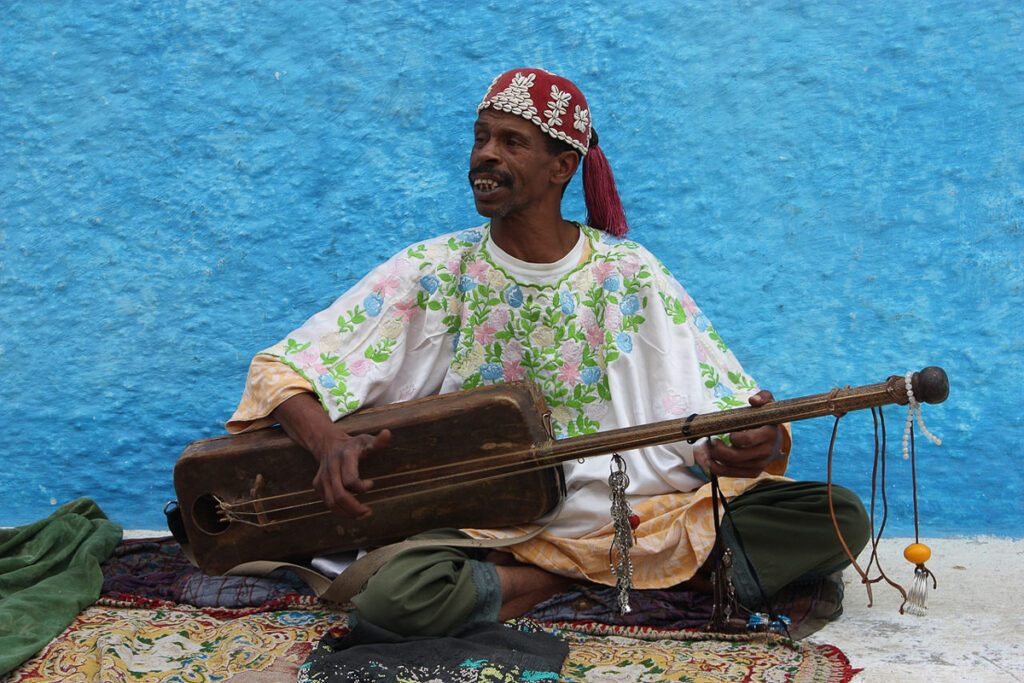
Gnawa Music Festival: Held in June, the Gnawa and World Music Festival is one of Morocco’s biggest cultural events. Gnawa music is a spiritual tradition blending sub-Saharan African, Berber, and Arabic elements, featuring the guembri (bass lute) and rhythmic chanting. The festival brings international musicians and hundreds of thousands of visitors — free outdoor concerts across the medina and beach. Book accommodation months in advance.
Orson Welles filmed his adaptation of Othello (1951) partly in Essaouira — there’s a small cinema named after him near Place Moulay Hassan. Jimi Hendrix visited in 1969, staying in the nearby village of Diabat — local legend says “Castles Made of Sand” was inspired by the area’s ruins, though the timeline is debated.
Day Trips from Essaouira
Diabat: A quiet village 3 km south of Essaouira, known for its Jimi Hendrix connection (1969) and the atmospheric ruins of Dar Soltane (also called Palais des Contes). A pleasant walk or short taxi ride. Local cafés serve mint tea with Atlantic views.
Île de Mogador: A small uninhabited island offshore, visible from the Skala. A nature reserve home to Eleonora’s falcon (a rare migratory raptor) and other seabirds. Boat trips can be arranged from the port (seasonal, check locally). The island has Phoenician and Portuguese ruins.
Argan forests: The road from Marrakech to Essaouira passes through argan tree country — you may spot the famous goats climbing argan trees. Cooperatives along the route offer tastings and purchasing — MDT day trips include an argan stop.
Practical Info
Getting around: The medina is compact and entirely walkable. No car needed inside the walls. The beach is a 5-minute walk from the medina.
Wind: Bring layers — even in summer, the Atlantic breeze can be cool, especially in the evenings. A light jacket or scarf is essential. Essaouira is 5–10°C cooler than Marrakech.
Cash: ATMs available in the new town and near Place Moulay Hassan. Many medina shops prefer cash. Cards accepted at larger restaurants and hotels.
Safety: Essaouira is one of Morocco’s safest and most relaxed towns. Standard precautions apply — watch belongings in crowded areas — but the hassle level is much lower than Marrakech.
How to Get There
From Marrakech: 190 km / ~2.5 hours by road. The drive passes through argan forests (goats in trees!) and is well-paved throughout.
MDT day trips: Shared from €19 · Private from €27. Both include transport and an argan cooperative stop. Depart ~8 AM, ~5–6 hours free time in Essaouira, return by evening.
By bus: Supratours and CTM operate daily services from Marrakech (~3 hrs, ~80 MAD). Multiple departures.
Day trip vs overnight: A day trip covers the medina, Skala, port, fish market, and beach comfortably. But an overnight stay lets you experience the sunset from the ramparts, the evening atmosphere, and a slower pace — highly recommended if time allows.
Where to Stay
Riads inside the medina (€30–80/night) are the best option — traditional Moroccan guesthouses with rooftop terraces and ocean views. Hostels from ~€10/night for budget travellers. Stay inside the medina walls for the full experience — you’ll wake up to the sound of seagulls and the call to prayer. For more on the riad experience: our riad guide.
Best Time to Visit
Spring (March–May): Best overall — mild (18–25°C), pleasant wind, green surroundings. Comfortable for walking and beach time.
Autumn (September–November): Equally good — warm, less crowded than summer, golden light.
Summer (June–August): Warm and windy — peak season for kitesurfing. Gnawa Festival in June (book early). Can be busy.
Winter (December–February): Mild (12–18°C) but can be wet and grey. Quietest season — atmospheric and local.
MDT Essaouira Day Trips
| Tour | Type | Includes | From |
|---|---|---|---|
| Essaouira Day Trip (Shared) | Group | Transport + argan stop + free time | €19 |
| Essaouira Day Trip (Private) | Private | Transport + argan stop + flexible schedule | €27 |
Where: Atlantic coast, 190 km / 2.5 hrs west of Marrakech. Population ~80,000.
Identity: Wind City of Africa. UNESCO medina. Whitewashed + blue shutters.
Must-do: Fish market lunch (~30–50 MAD), Skala ramparts, medina, beach, port.
Culture: Gnawa Festival (June), Jimi Hendrix + Diabat, Orson Welles + Othello, thuya wood.
Wind sports: Kitesurfing/windsurfing. Lessons ~€40–60. Best wind: Apr–Nov.
MDT: Shared day trip from €19 · Private from €27.