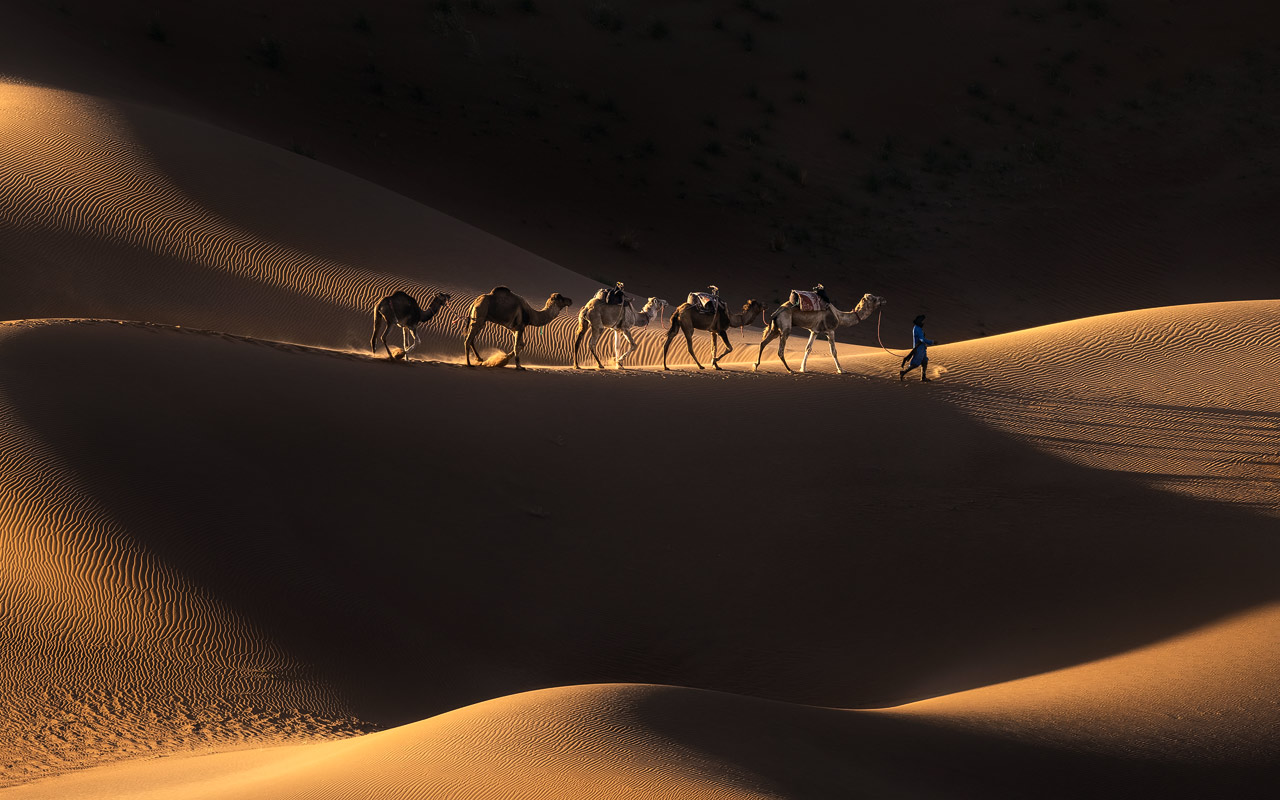
Moroccan cuisine blends Berber, Arab, Andalusian, and Mediterranean influences. The 5 essential dishes: tagine (slow-cooked stew, ~30–60 MAD), couscous (Friday family tradition), harira (lentil-chickpea soup, especially during Ramadan), bastilla (savoury warqa pie), and mint tea (the national drink — served everywhere, refusing is impolite). The signature spice blend is Ras el Hanout (~40 spices). Street food at Jemaa el-Fnaa: grilled kebabs (~20–40 MAD), fresh orange juice (~5 MAD), msemen flatbread (~5 MAD). Budget travellers eat well for under 150 MAD/day. On MDT desert tours: camp tagine dinner, roadside lunches, and medfouna (Berber pizza baked in sand).
Must-Try Moroccan Dishes
Every dish below is something you’ll encounter on a trip to Morocco — at restaurants, street stalls, riad dinners, or on a desert tour. Prices are for local restaurants and stalls (tourist restaurants charge more).
| Dish | What It Is | Where / When | Price |
|---|---|---|---|
| Tagine | Slow-cooked stew in conical clay pot — chicken, lamb, kefta, or veg | Everywhere. THE Moroccan dish. | ~30–60 MAD |
| Couscous | Steamed semolina with vegetable stew — Friday family tradition | Restaurants (esp. Friday). Camp meals. | ~40–60 MAD |
| Harira | Lentil-chickpea-tomato soup — Morocco’s comfort food | Year-round. Essential at Ramadan iftar. | ~10–20 MAD |
| Bastilla (pastilla) | Savoury warqa pie — chicken or seafood, Andalusian origin | Special occasions. Fes is the capital. | ~50–80 MAD |
| Mint tea (atay) | Green tea + spearmint + sugar, poured from height | Everywhere. All day. Refusing is impolite. | ~10–15 MAD |
| Tanjia | Slow-cooked meat pot — unique to Marrakech | Marrakech specialty. Jemaa el-Fnaa. | ~50–80 MAD |
| Kebabs / Kefta | Grilled lamb/beef skewers — charcoal-fire street food | Street stalls, Jemaa el-Fnaa. | ~20–40 MAD |
| Msemen | Layered flatbread — sweet with honey or savoury with fillings | Breakfast, street stalls. | ~3–5 MAD |
| Baghrir | “Thousand-hole” spongy pancakes with honey-butter | Breakfast. Ramadan. | ~5–10 MAD |
| Khobz | Round crusty bread — used as utensil, served with every meal | Everywhere. Bakeries from ~2 MAD. | ~2–3 MAD |
| Zaalouk | Smoky eggplant-tomato dip — the best vegetarian starter | Side dish. Restaurants, riads. | Side dish |
| Bissara | Fava bean soup/dip — cumin, olive oil, winter staple | Northern Morocco, Chefchaouen. | ~5–10 MAD |
| Sardines (fried/grilled) | Fresh Atlantic sardines — Morocco is world’s #1 exporter | Essaouira fish market. | ~30–50 MAD |
| Medfouna | “Berber pizza” — meat-stuffed flatbread baked in desert sand | Sahara desert tours, Rissani. | Included on tour |
| Chebakia | Rose-shaped sesame cookie, honey-orange blossom — Ramadan classic | Bakeries. Ramadan season. | ~10–20 MAD |
| Kaab el Ghazal | “Gazelle horns” — almond paste crescents, orange blossom | Pastry shops. Celebrations. | ~5–10 MAD each |
| Shakshuka | Poached eggs in spiced tomato sauce — breakfast dish | Cafés, riads. Breakfast. | ~25–40 MAD |
| Briouates | Crispy warqa pastry triangles — sweet or savoury fillings | Appetiser. Ramadan. | ~5–15 MAD |
| Rfissa | Chicken + lentils on shredded trid pastry — postpartum tradition | Home cooking. Family occasions. | ~40–60 MAD |
| Babbouch | Snail soup — spiced broth street food, eaten with a toothpick | Jemaa el-Fnaa, Marrakech medina. | ~5–10 MAD |
The Five Essentials
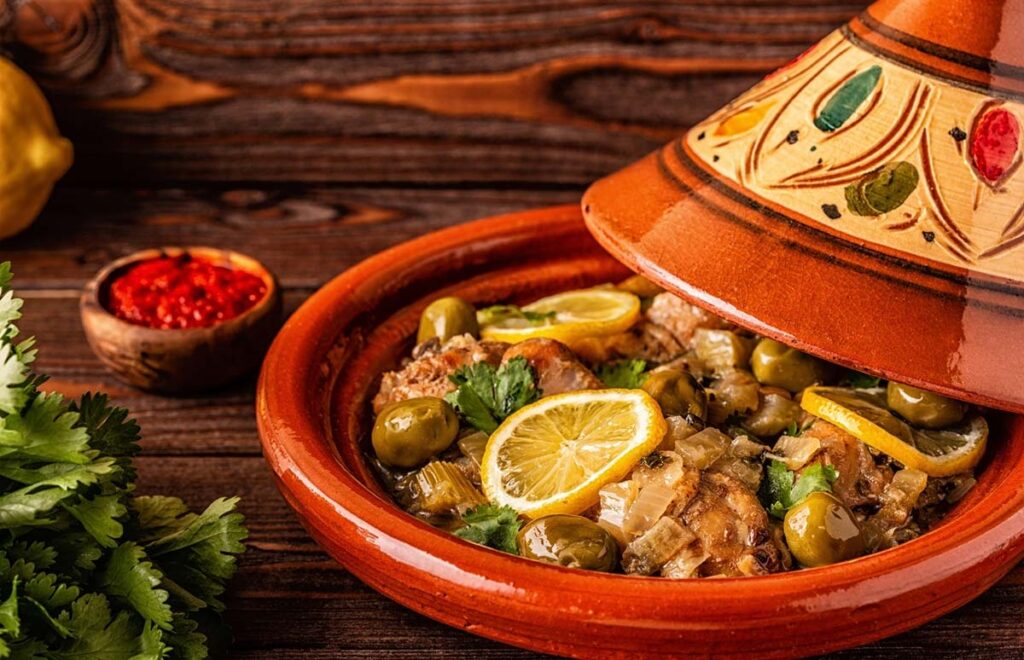
Tagine is both the dish and its iconic conical clay cooking pot. The cone shape traps steam and returns moisture, making meat tender without much water — a practical design in arid Morocco. Common varieties: chicken with preserved lemon and olives (the classic), lamb with prunes and almonds (sweet-savoury), kefta with eggs (meatballs in tomato sauce), and vegetable tagine. Every restaurant in Morocco serves tagine — it’s the national dish. ~30–60 MAD at a local restaurant.
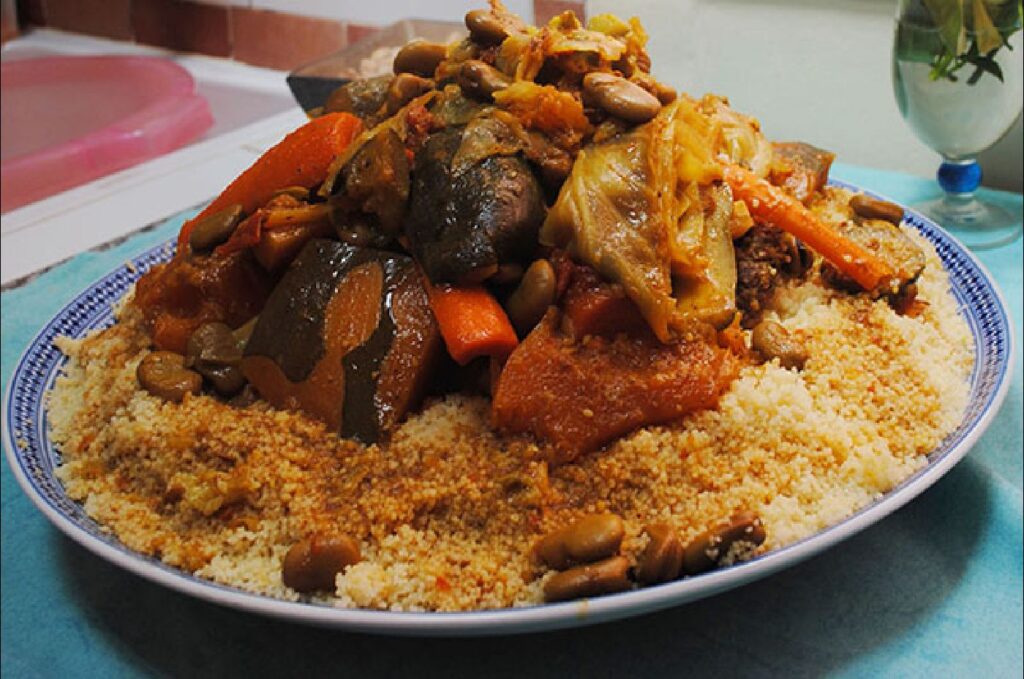
Couscous — steamed durum wheat semolina, traditionally hand-rolled and steamed in a couscousière, served with a vegetable stew. It’s the Friday dish: after Friday prayers, Moroccan families gather for a large couscous meal. You’ll see it on menus every day, but Friday is when it’s freshest and most ceremonial. ~40–60 MAD.
Harira — a rich lentil-chickpea-tomato soup seasoned with turmeric, cinnamon, ginger, and fresh herbs. Eaten year-round, but it has special significance during Ramadan: it’s the first food served at iftar (sunset meal), alongside dates and chebakia. Warming, filling, and deeply comforting. ~10–20 MAD at a street stall.
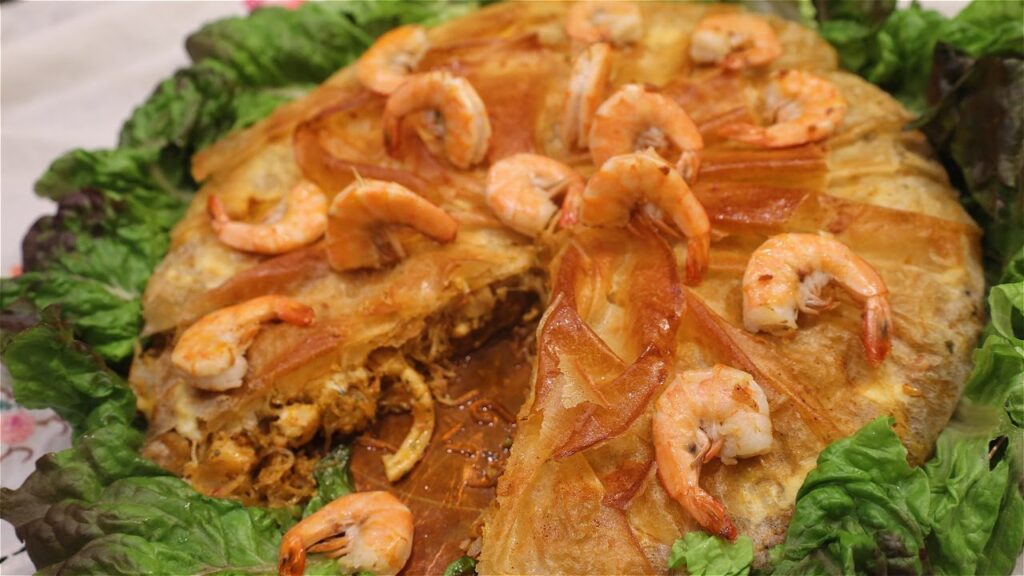
Bastilla (pastilla) — a savoury pie wrapped in paper-thin warqa dough. The name comes from the Spanish “pastilla” (small pastry) — reflecting its Andalusian origins. The classic version: shredded chicken, almonds, cinnamon sugar, and egg custard layered in warqa, baked golden, and dusted with powdered sugar. The seafood version: prawns, squid, fish, and vermicelli in a spicy tomato sauce. Fes is considered the bastilla capital. ~50–80 MAD.
Mint tea (atay) — Morocco’s national drink. Green tea with fresh spearmint and generous sugar, poured from height to create a froth. Served after every meal, during negotiations, as a welcome gesture, and throughout the day. Refusing mint tea is considered impolite — accept at least one glass. Expect to drink several per day. ~10–15 MAD at a café, usually free at shops and riads.
Street Food — Jemaa el-Fnaa & Beyond
Jemaa el-Fnaa in Marrakech is Morocco’s most famous food destination — dozens of open-air stalls serving grilled meats (kebabs, merguez sausage, lamb chops — ~20–40 MAD), harira (~10 MAD), fresh orange juice (~5 MAD from the juice carts), snail soup (babbouch) — a bowl of spiced snails eaten with a toothpick (~5–10 MAD), and msemen (layered flatbread with honey or cheese, ~3–5 MAD). Choose stalls where locals are queuing — high turnover means fresh food.
Tanjia deserves a special mention: this is unique to Marrakech — a slow-cooked meat pot (lamb or beef with preserved lemon, saffron, ras el hanout) sealed in a clay urn and left in the embers of a hammam furnace for 6–8 hours. It’s the working man’s feast, traditionally prepared by bachelor men (hence its nickname “the bachelor’s tagine”). Find it at Jemaa el-Fnaa stalls and Marrakech medina restaurants. ~50–80 MAD.
Breads & Breakfast
Bread is sacred in Moroccan culture — khobz (round crusty bread, ~2–3 MAD from the bakery) accompanies every meal and doubles as a utensil for scooping tagine and dipping. For breakfast: msemen (layered flatbread, sweet with honey or savoury with cheese), baghrir (“thousand-hole” spongy pancakes drizzled with honey-butter — the holes absorb the syrup perfectly), harcha (crispy semolina pan-bread), and rghaif (thin folded flatbread). Street bakeries sell these from ~3–10 MAD.
Desserts
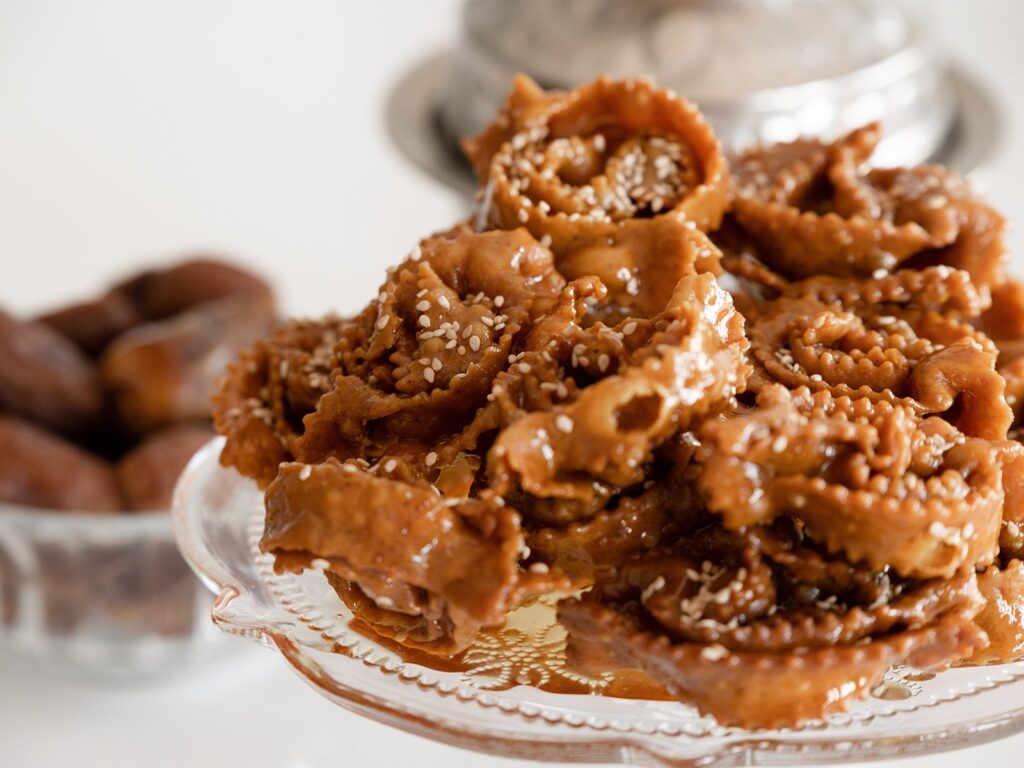
Chebakia — rose-shaped sesame cookies, deep-fried and coated in honey-orange blossom syrup, sprinkled with sesame seeds. The classic Ramadan treat — Moroccan women gather to make large batches before the holy month. Kaab el Ghazal (“gazelle horns”) — crescent-shaped pastries filled with almond paste, cinnamon, and orange blossom water, dusted with powdered sugar. Sellou — a dense, energy-rich paste of roasted flour, almonds, honey, and sesame, shaped into a pyramid — traditionally given to new mothers for its nutritional value. Ghriba — almond-sesame cookies with a distinctive cracked surface (the cracks are a sign of quality).
Spices — Ras el Hanout
Moroccan cooking is defined by its spice palette: cumin (earthy, warm — used in almost everything), saffron (the world’s most expensive spice — Morocco is a major producer), cinnamon (sweet warmth in tagines and desserts), turmeric (golden colour), paprika, ginger, and fenugreek. The crown jewel is Ras el Hanout — literally “head of the shop,” a blend of up to 40 spices that varies from spice merchant to spice merchant. Every vendor has their own secret recipe. Buy it loose at the Marrakech souks (~20–50 MAD per 100g).
Food on a Desert Tour
Food is a highlight of every MDT desert tour — not just fuel, but part of the experience:
Roadside tagine lunch (Day 1–2): The driver stops at a local restaurant in the Atlas or Dades Valley — a freshly cooked tagine, bread, salad, and mint tea. ~60–80 MAD (not included in tour price, budget accordingly).
Camp dinner (Night 1–2): The camp cook prepares a multi-course meal: starter salad, tagine or couscous, fruit, and mint tea — eaten under the stars with Berber drumming. Included in the tour.
Medfouna (desert region): “Berber pizza” — a meat-stuffed flatbread baked in hot sand. The desert’s signature dish, typically served at lunch. Unique to the Sahara region and the Rissani area.
Camp breakfast (Day 2–3): Msemen or rghaif, jam, cheese, coffee/tea — simple but satisfying before the sunrise camel trek. Included.
Where to Eat in Marrakech
Jemaa el-Fnaa food stalls — cheapest and most authentic. Grilled meats, harira, juice, babbouch. ~20–50 MAD for a full meal. Open evenings. Choose busy stalls.
Medina restaurants — tagines, couscous, bastilla in quieter settings. ~40–80 MAD per dish. Look for places where locals eat — typically down side alleys, not on the main square.
Riad dinners — multi-course Moroccan feasts in a traditional courtyard setting. ~100–200 MAD. Often the highlight of a Marrakech stay — book in advance.
Cooking classes — learn to make tagine, pastilla, or msemen with a local chef. Usually includes a souk shopping trip for ingredients. Half-day from ~300–500 MAD.
Practical Tips
Eating etiquette: Eat with your right hand (left is considered unclean). Use bread (khobz) as a utensil. Meals are communal — eat from the portion of the shared plate closest to you.
Tipping: ~10% at restaurants. Round up at street stalls.
Vegetarian: Morocco is excellent for vegetarians — zaalouk, taktouka, bissara, vegetable tagine, couscous, lentil dishes, and the many breads. Ask for “bla l’ham” (without meat).
Halal: All meat in Morocco is halal by default. Pork is not served.
Water: Drink bottled water. Mint tea and coffee are safe (boiled). Avoid tap water and ice in street drinks.
MDT Tours — Food Included
| Tour | Meals Included | From |
|---|---|---|
| 3-Day Merzouga (Shared) | 2× camp dinner + breakfast, medfouna | €95 |
| 2-Day Zagora (Shared) | 1× camp dinner + breakfast | €69 |
| 4-Day Merzouga (Private) | 3× dinner + breakfast, medfouna | €275 |
5 essentials: tagine, couscous (Friday), harira (Ramadan), bastilla, mint tea.
Signature spice: Ras el Hanout — up to 40 spices, every vendor’s recipe different.
Street food: Jemaa el-Fnaa — kebabs (~20–40 MAD), orange juice (~5 MAD), babbouch (~5 MAD).
Budget: Full meals from ~30 MAD. Eat well for under 150 MAD/day.
Desert food: Camp tagine dinner (included), medfouna (Berber pizza), roadside tagine lunch (~60–80 MAD).
Etiquette: Right hand, bread as utensil, communal plates, accept mint tea.